
Article by
Hardworking Handyman LLC
Hardworking Handyman™ brings decades of hands-on experience in home repair, construction, mechanical work, property maintenance, and troubleshooting. Our practical approach comes from years of working directly with homes, equipment, repairs, and real-world projects—not just writing about them. Hardworking Handyman™ serves homeowners, landlords, Realtors, and property managers throughout the San Francisco Bay Area, East Bay, and Tri-Valley, including Dublin, Pleasanton, Livermore, San Ramon, Danville, Fremont, Castro Valley, and surrounding communities. We specialize in everyday home repairs, doors, drywall, painting, fixture installation, rental turnovers, apartment maintenance, and general property maintenance. Our articles are designed to share practical home-repair knowledge, maintenance tips, and firsthand insight that helps property owners understand their homes and make informed repair decisions.
Durable exterior sealing demands complete joint excavation, yet too many contractors cut corners by slapping fresh sealant right over old, crumbling caulk. That cosmetic fix fails fast. If you need dependable caulking services for windows and doors, you want a crew that strips the joint down to bare substrate instead of just masking the problem.
You already know the frustration of feeling drafts creep across a room while your heating and cooling bills tick upward. Spotting cracked sealant or faint water staining around your trim is stressful, especially when you dread paying someone who might simply caulk or paint over failing materials.
This guide shows you how to evaluate professional contractors so you can protect your home from moisture intrusion, eliminate drafts, and avoid expensive structural repairs. We will walk through the essential questions to ask upfront, the preparation steps every skilled technician must follow, and how to verify that your home receives clean, weather-tight seals built to last.
Key Takeaways
- Understand why professional caulking services for windows and doors must mechanically strip old sealant down to the bare substrate rather than laying a cosmetic bead over old material.
- Learn how to match commercial-grade elastomeric sealants to your specific frame materials for maximum joint flexibility and weatherproofing.
- Discover the critical screening questions that expose corner-cutting crews before you sign an estimate.
- Recognize what a correct installation looks like, including backer rod placement that prevents joint stress and premature tearing.
- See how complete perimeter sealing defends your property against hidden framing rot and reduces seasonal heating and cooling loss.
Why Professional Caulking Services for Windows and Doors Matter
Every home shifts. Exterior walls expand under summer heat and contract during winter chills. When vinyl, aluminum, stucco, and wood trim meet around your openings, they move at different rates. Without a durable barrier bridging these gaps, the building envelope fails. Investing in professional caulking services for windows and doors creates a flexible, airtight joint that moves with your home while locking out external elements.
A high-performance sealant does far more than improve exterior aesthetics. It acts as an elastomeric expansion joint designed to absorb structural vibration, thermal movement, and settling. When you book verified California handyman services to seal these perimeters, you protect the vulnerable framing hidden behind your walls.
Preventing Costly Structural Moisture and Water Intrusion
Exterior gaps invite wind-driven rain straight behind siding and stucco cladding. Once water penetrates an unsealed perimeter, gravity pulls it downward into wall cavities. This moisture rots window bucks, door thresholds, and structural sill plates out of sight. Prompt professional caulking prevents secondary drywall repairs, interior framing damage, and expensive mold remediation before minor cracks become structural emergencies.
- Blocks wind-driven rain from penetrating the junction between frames and exterior cladding.
- Stops moisture from rotting timber rough openings, header beams, and subflooring.
- Protects interior finishes by stopping hidden leaks before they stain baseboards and drywall.
Lowering Utility Bills and Eliminating Interior Drafts
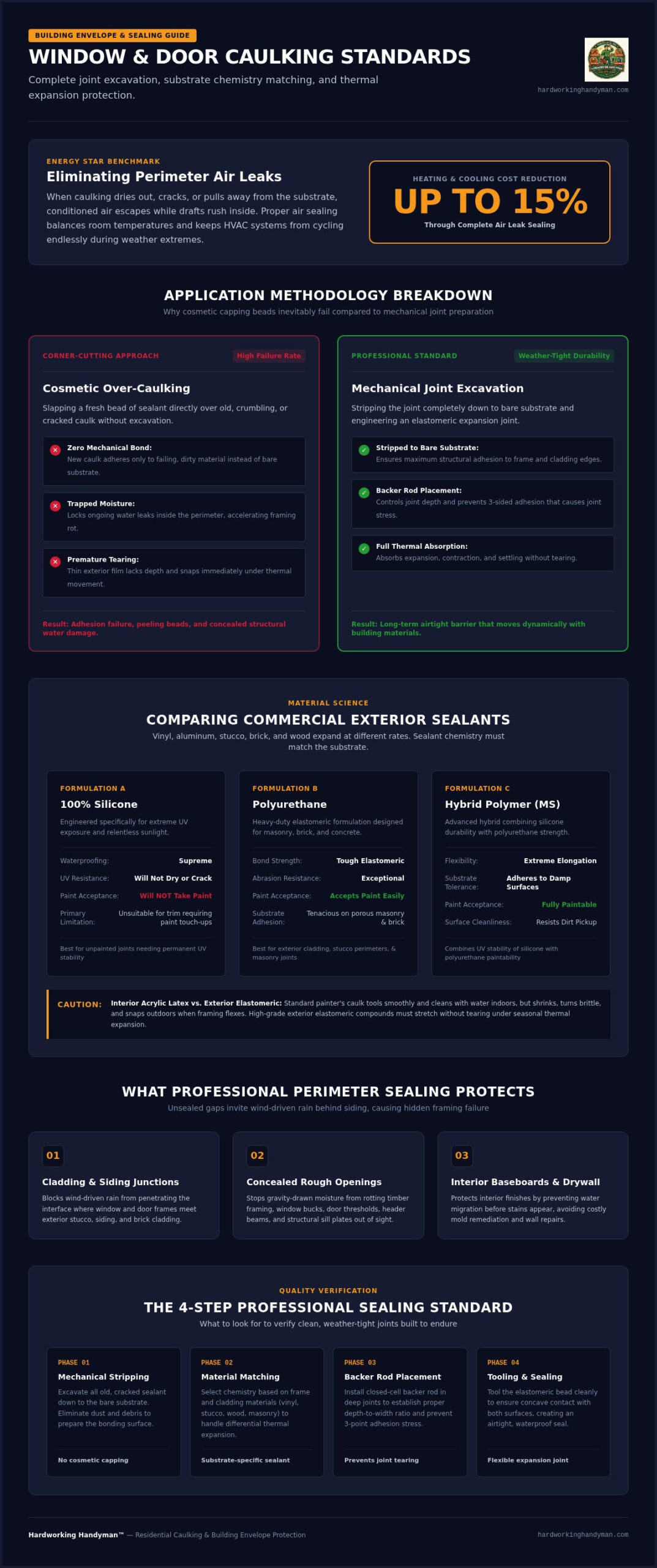
Perimeter air leaks force heating and cooling systems to work overtime. According to ENERGY STAR, sealing air leaks around your home can cut heating and cooling costs by up to 15%. When old caulking dries out, cracks, or pulls away from the substrate, conditioned indoor air escapes while exterior drafts rush inside.
Quality sealing delivers immediate improvements. Securing perimeter joints eliminates uncomfortable drafts along baseboards, balances uneven room temperatures, and prevents your HVAC unit from cycling endlessly during weather extremes.
Comparing Window and Door Sealants: Durability, Flexibility, and Materials
Substrate materials dictate which sealant chemistry will actually hold. Stucco, brick, vinyl, and wood expand at radically different coefficients when exposed to direct sunlight. Squeezing a generic tube into every joint guarantees early adhesion failure, messy bubbling, and peeling beads. Choosing top-tier caulking services for windows and doors means hiring technicians who tailor product chemistry directly to your specific building materials.
100% Silicone vs. Polyurethane vs. Hybrid Polymer Sealants
Exterior perimeters require compounds engineered for relentless UV exposure and severe joint movement. Three main chemistries lead the market:
- 100% Silicone: Provides supreme waterproofing and will not dry out or crack under harsh sunlight. However, standard paint will not stick to it, making it unsuitable where exterior trim requires paint touch-ups.
- Polyurethane: Forms a tough, elastomeric bond with exceptional abrasion resistance. It adheres tenaciously to porous masonry, brick, and concrete surfaces, and accepts paint easily once cured.
- Hybrid Polymer Sealants (MS Polymers): Combine the UV durability of silicone with the paintability and strength of polyurethane. They offer extreme elongation, adhere reliably to damp substrates, and resist dirt pickup.
Interior Acrylic Latex vs. Exterior Elastomeric Formulations
Indoor and outdoor joints face completely different physical stresses. Standard acrylic latex caulk works fine for indoor trim, crown molding, and baseboards because interior rooms maintain fairly steady temperatures. It tools smoothly, cleans up with water, and takes paint flawlessly without flashing.
Outdoor joints are an entirely different story. Applying cheap painter’s caulk outside is a recipe for quick failure. Standard acrylic formulas shrink as they dry, turn brittle under outdoor exposure, and snap when the framing flexes. High-grade exterior elastomeric formulations stay flexible across wide seasonal heat swings, stretching rather than tearing apart. If you want perimeter beads matched correctly to your home’s exterior cladding, scheduling professional handyman caulking ensures the right material is applied to every joint.
How to Evaluate and Choose the Best Caulking Contractor
Hiring the right contractor protects your home from shoddy patch jobs. Many general laborers treat sealant work like quick cosmetic touch-ups, yet durable sealing requires rigorous joint preparation and precise tooling. When vetting providers for professional caulking services for windows and doors, look beyond online star ratings. You need a contractor who understands structural movement and stands behind their work.
Critical Questions to Ask Potential Caulking Services
Before approving any estimate, get clear answers on their exact scope of work. Use these direct questions during your initial consultation:
- Do you mechanically strip old sealant down to bare substrate? Never accept bids that rely on skimming fresh caulk over failing beads.
- Which specific sealant brand and chemistry will you use? Ensure they specify commercial elastomeric or hybrid polymers tailored to your wall materials.
- Do you install closed-cell backer rods in wide joints? Deep gaps require compressible foam rods to regulate depth and avoid structural joint failure.
- Are you licensed and insured? Always confirm active general liability and worker coverage.
Warning Signs of Substandard and Rushed Caulking Work
Low bids often hide expensive shortcuts. Watch out for contractors who plan to caulk directly over cracked, dirty, or moldy surfaces. That shortcut traps moisture inside and fails within months. Walking around with cheap indoor painter’s caulk for exterior perimeters is another major red flag. Similarly, stuffing deep exterior voids with wet caulk rather than backer foam leads to three-sided adhesion, causing the bead to tear down the center during seasonal shifts.
Why Comprehensive Handyman Expertise Delivers Superior Results
Windows and doors rarely operate in total isolation. Gaps frequently stem from sagging hinges, loose framing, or settling jambs. Experienced technicians don’t just apply caulk; they check the surrounding stucco, trim, and siding for hidden damage. If a jamb has shifted out of plumb or suffered moisture rot, you need a specialist capable of full door repair and installation before laying fresh sealant.
A seasoned professional diagnoses the root cause of drafty frames and perimeter leaks in one visit. When you schedule dependable California handyman services, you get full-scope exterior maintenance that addresses trim repairs, hardware adjustments, and perimeter weatherproofing all together.
The Professional Caulking Process: What Quality Application Looks Like
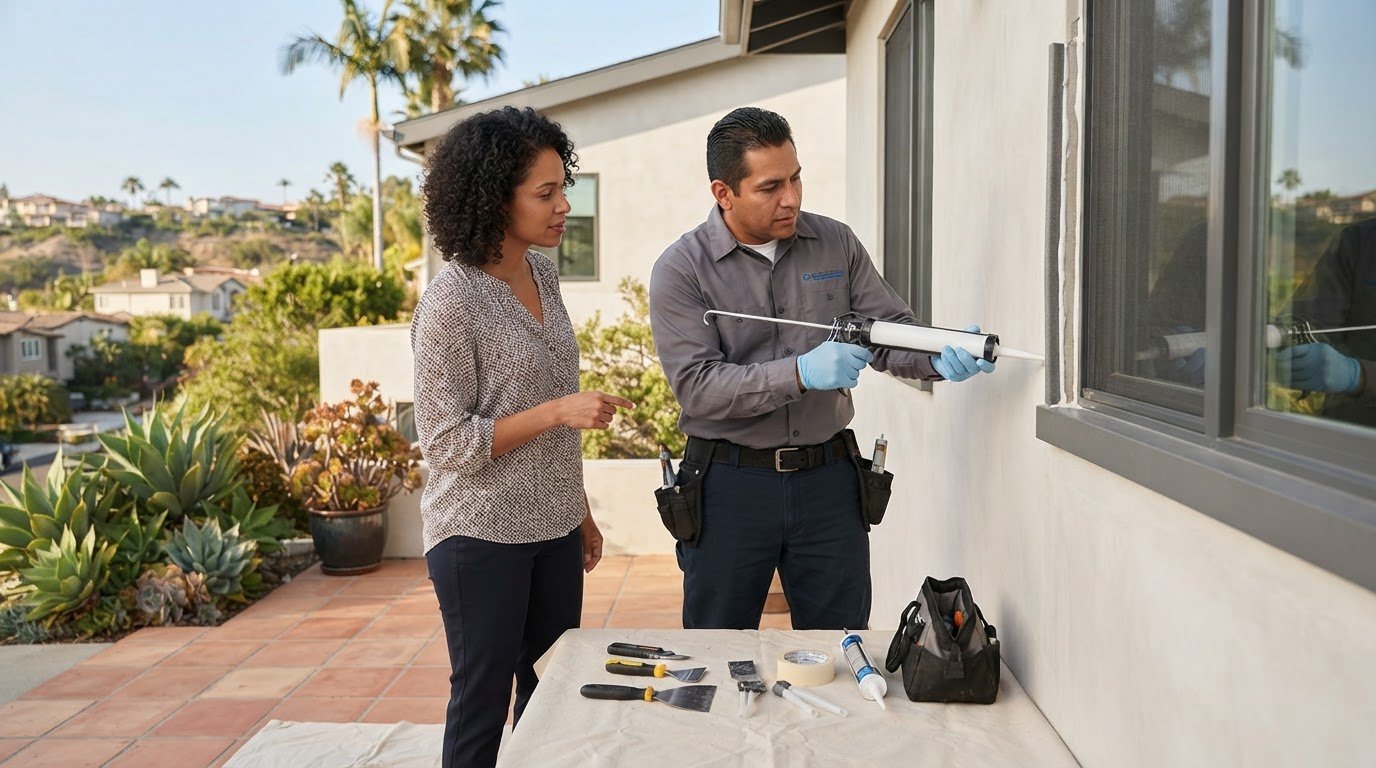
Quality sealing relies on precise execution. Anyone can squeeze a trigger, but lasting weatherproofing demands disciplined joint preparation and geometry. When you schedule professional caulking services for windows and doors, the work should follow a clear, three-stage process that guarantees long-term adhesion.
Step 1: Complete Removal of Old, Degraded Sealant
Technicians begin by carving out brittle, weathered caulk using oscillating blades, utility knives, and carbide pull scrapers. They clear out every trace of old material until the joint channel reaches bare substrate. Next, wire brushes remove loose masonry dust, peeling paint flakes, and dirt. Finally, technicians wipe the joint faces with residue-free solvent to lift remaining oils, leaving clean, bone-dry bonding surfaces.
Step 2: Joint Sizing and Backer Rod Insertion
Deep expansion joints cannot simply be filled with wet sealant. Gaps exceeding one-quarter inch in depth require closed-cell foam backer rods. Technicians press this flexible rod into the gap using a blunt roller tool, keeping the depth consistent along the whole perimeter. Backer rod accomplishes three vital tasks:
- Controls joint depth: Keeps sealant depth at roughly half the joint’s width for ideal elasticity.
- Creates an hourglass profile: Allows the bead to stretch and compress easily across thermal cycles.
- Prevents three-point adhesion: Ensures the sealant bonds only to opposite sides, avoiding tearing at the joint base.
Step 3: Precision Application and Professional Tooling
Consistent gunning technique produces an unbroken, bubble-free bead along the entire frame. Holding the dispenser at a consistent 45-degree angle, the installer forces sealant deep into the joint channel rather than letting it sit loosely on the surface. Right after dispensing, the technician tools the joint using specialized profiling spatulas.
Tooling presses the wet bead firmly against the sidewalls to eliminate hidden microscopic voids and establish a permanent chemical bond. It also shapes a clean, water-shedding angle that directs rain away from the frame while keeping brick, siding, and glass trim free of smears.
Protect Your Home: Booking Reliable Handyman Caulking Services
Perimeter maintenance safeguards your home against premature aging. Leaving weathered joints unaddressed lets damp air seep inward, quietly degrading framing, baseboards, and sill plates. In contrast, timely caulking services for windows and doors lock out moisture, eliminate draft corridors, and protect your long-term property equity. Hardworking Handyman™ LLC provides the seasoned craftsmanship and dedicated customer attention your residence deserves.
Our technicians take a comprehensive approach to exterior perimeters. We don’t just apply sealant; we inspect each window frame, door threshold, and adjoining stucco transition for movement or underlying wear. You receive honest assessments, clean work areas, and durable results tailored specifically to your home’s exterior cladding.
Tailored Solutions for Homeowners, Landlords, and HOAs
Every property type faces unique maintenance demands, which is why our service scopes adapt to your operational priorities:
- Single-Family Residences: We perform full building envelope sealing that secures older casings, prevents draft infiltration, and restores clean exterior lines.
- Rental Property Turnovers: Property managers rely on us to refresh deteriorating bath seals, seal exterior entries, and eliminate pest entry gaps quickly between tenants.
- HOA Communities: We deliver uniform architectural results across multiple exterior units, keeping communities fully aligned with neighborhood standards.
Fast scheduling and efficient job site setups minimize disruptions to your daily routine or tenant move-in dates.
Get Started with a Fast, Free Estimate
Finding a reliable local professional should never involve tedious bidding platforms or automated call centers. Our technicians evaluate your exterior joints, identify failing seals, and check for framing settling in person. We walk the perimeter with you, explain the exact elastomeric materials required, and provide a clear, upfront proposal without hidden fees or surprise additions.
Take proactive control of your home’s envelope protection before seasonal weather arrives. Schedule your perimeter inspection today with Hardworking Handyman™ LLC to secure dependable, long-lasting caulking services for windows and doors.
Secure Your Home Envelope with Expert Perimeter Sealing
Protecting your property from drafts and water intrusion doesn’t require guesswork. Long-lasting caulking services for windows and doors depend on complete extraction of failing beads, proper backer rod placement, and durable elastomeric formulas suited to your siding. Skipping these critical steps leaves your wall cavities vulnerable to framing rot and spikes your seasonal power bills.
Hardworking Handyman™ provides seasoned craftsmanship across Los Angeles, Orange County, the San Gabriel Valley, and the Bay Area. Our crews manage everything from exterior perimeter sealing to complete door replacement and trim repair. With fast same-day scheduling and free transparent estimates, keeping your living space comfortable is straightforward.
Take the first step toward durable weather protection and enjoy total peace of mind in every room.
Frequently Asked Questions
How often should exterior windows and doors be recaulked?
Inspect your exterior seals every year and plan to recaulk every five to ten years depending on sun exposure. In sunny regions across Los Angeles and the San Gabriel Valley, intense ultraviolet light breaks down exterior sealants faster than average. South- and west-facing walls bear the brunt of the heat. Schedule professional caulking services for windows and doors whenever you notice hardening, cracking, or peeling along the trim.
Can professional caulking services caulk over existing old caulk?
No, a dependable professional will never apply new caulk directly over old beads. Fresh sealant cannot form a secure mechanical bond with dirty, cracked, or oxidized material. Skimming over failing joints traps moisture beneath the surface, accelerating framing rot and causing the new bead to peel away within months. Reliable contractors always extract the old caulk down to the bare substrate before laying fresh sealant.
What type of caulk is best for exterior window and door frames?
High-performance hybrid polymers and commercial polyurethanes provide the best balance of flexibility and weather resistance for home exteriors. These elastomeric sealants stretch and compress as your home shifts during seasonal temperature swings. While pure silicone resists water well, it cannot be painted to match your exterior trim. Polyurethanes and hybrid polymers adhere tenaciously to stucco, wood, vinyl, and fiber cement while accepting paint smoothly once cured.
How do I know if my window and door caulking has failed?
Look for visible cracks, shrinking beads, discoloration, or gaps pulling away from the siding. Interior warning signs include persistent drafts along baseboards, rattling panes, or water staining below window sills. On the outside, press the bead with your finger. If it feels hard and brittle rather than rubbery, the material has degraded. Booking caulking services for windows and doors quickly stops water from penetrating underlying structural framing.
Will professional caulking around windows and doors reduce my energy bills?
Yes, sealing perimeter air leaks can lower your heating and cooling costs by up to 15%. Exterior doors and windows represent significant weak points in your home’s thermal envelope. When gaps open around framing, conditioned air escapes while outdoor heat or winter drafts rush inside. Thorough sealing stabilizes your indoor living temperatures, eliminates drafty rooms, and reduces wear on your HVAC system by preventing constant cycling.
Can you caulk windows and doors in cold or damp weather?
Sealants should never be applied to damp surfaces or during rain. Trapped moisture on the substrate ruins adhesion and causes premature joint failure. Most exterior elastomeric and hybrid sealants require dry substrates and ambient temperatures between 40 and 90 degrees Fahrenheit for proper curing. Across coastal Los Angeles and the Bay Area, experienced technicians monitor morning dampness and wait for full exterior dryness before applying perimeter beads.
What is the purpose of a backer rod in window caulking?
A backer rod controls joint depth and prevents three-sided adhesion in gaps wider or deeper than one-quarter inch. When sealant sticks to two parallel frame edges and the joint base simultaneously, thermal expansion tears the center of the bead. Compressible closed-cell foam prevents this base bond, allowing the sealant to stretch like an elastic band. It also creates an optimal hourglass profile that maximizes flexibility.