Article by
Hardworking Handyman LLC
Hardworking Handyman™ brings decades of hands-on experience in home repair, construction, mechanical work, property maintenance, and troubleshooting. Our practical approach comes from years of working directly with homes, equipment, repairs, and real-world projects—not just writing about them. Hardworking Handyman™ serves homeowners, landlords, Realtors, and property managers throughout the San Francisco Bay Area, East Bay, and Tri-Valley, including Dublin, Pleasanton, Livermore, San Ramon, Danville, Fremont, Castro Valley, and surrounding communities. We specialize in everyday home repairs, doors, drywall, painting, fixture installation, rental turnovers, apartment maintenance, and general property maintenance. Our articles are designed to share practical home-repair knowledge, maintenance tips, and firsthand insight that helps property owners understand their homes and make informed repair decisions.
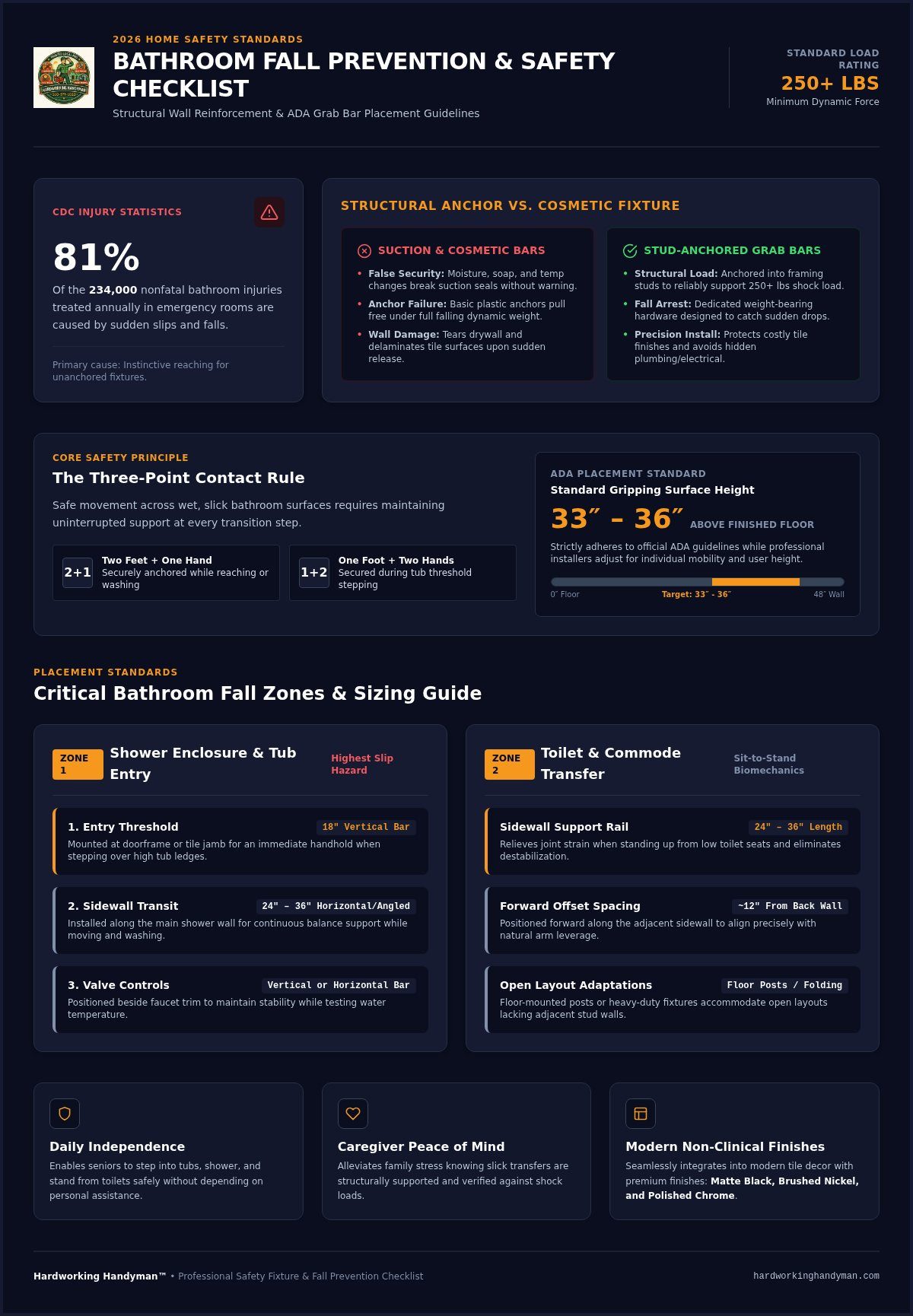
Over 81% of the 234,000 nonfatal bathroom injuries treated in emergency departments each year stem from sudden slips and falls. When balance shifts on wet tile, instinct takes over, and hands reach for whatever is closest. If that fixture is a suction handle or a hollow towel bar, it can easily rip out under full body weight. You want to protect your family and preserve their independence, but worries about cracked tile and confusing height guidelines can leave you hesitating. That is where a dedicated grab bar installation service delivers immediate safety and confidence.
Professional installation transforms your bathroom into a secure environment, preventing dangerous falls with rock-solid mounting that reliably supports 250 pounds or more. You don’t have to settle for an institutional look or risk damaging expensive finishes to achieve total stability. Below, our 2026 home safety checklist covers essential placement standards, structural stud-anchoring methods, and everything you need to keep your home safe and dignified.
Key Takeaways
- Understand why true fall prevention relies on structural wall reinforcement rather than cosmetic towel bars or temporary suction grips.
- Identify the three critical bathroom fall zones and learn how the three-point contact rule ensures safe, steady movement.
- Discover the mounting methods and heavy-duty hardware required to guarantee every fixture withstands at least 250 pounds of force.
- Explore how a professional grab bar installation service prevents costly tile damage and avoids hidden plumbing or electrical lines.
- Compare modern grip textures, stainless steel grades, and stylish finishes that maintain bathroom dignity without looking institutional.
Why Professional Grab Bar Installation Is Essential for Home Safety
Safety hardware is not bathroom decoration. Real fall prevention requires structural reinforcement, anchoring solid metal directly into framing to handle sudden shock loads. Centers for Disease Control data indicates that bathroom falls account for the vast majority of accidental home injuries, turning everyday routines into serious hazards. For homeowners asking what is a grab bar, it is a dedicated weight-bearing safety fixture designed to arrest a fall, not a decorative accessory or towel holder.
Relying on superficial cosmetic updates or quick stick-on handles leaves families vulnerable. A professional grab bar installation service secures fixtures directly into structural studs, ensuring they hold firm when someone needs them most.
To see how a secure mount comes together on real bathroom walls, watch this step-by-step walkthrough:
The Hidden Danger of DIY and Suction Grab Bars
Suction grab bars and tension rods create dangerous false security. Moisture, soap residue, and regular shower temperature changes break airtight suction seals without warning. There is also a major mechanical difference between supporting light balance and catching dynamic falling weight. When an adult loses footing, their body mass drops with sudden, concentrated force. Suction cups release instantly, and basic hollow-wall plastic anchors pull free, tearing drywall and delaminating tile surfaces.
Key Benefits of Professional Mounting for Aging in Place
Professional installation bridges the gap between home safety and everyday comfort, supporting long-term mobility without compromising your home’s appearance:
- Protects daily independence: Allows seniors to step into tubs, stand from toilets, and shower without relying on personal assistance.
- Alleviates caregiver stress: Gives family members peace of mind knowing slick shower transfers are structurally supported.
- Maintains clean aesthetics: Blends modern finishes like matte black, brushed nickel, and polished chrome into existing tile decor without looking clinical.
Investing in a reliable grab bar installation service ensures every bracket is structurally anchored, giving your home lasting fall protection.
The Bathroom Safety Checklist: Critical Locations and Placement Standards
Safe bathroom navigation requires maintaining continuous support across wet, slick surfaces. Safe movement relies on the three-point contact rule: keeping two feet and one hand, or two hands and one foot, securely anchored at every step. Meeting official ADA guidelines means mounting rails so the gripping surface sits between 33 and 36 inches above the finished floor, strictly adhering to standards for the structural strength of grab bars. A professional grab bar installation service assesses the specific mobility limits and height of the person using the space rather than relying on generic formulas.
Zone 1: Shower Enclosure and Bathtub Entry Points
Stepping over a high tub ledge or shower threshold creates the highest slip risk in the home. Anchor these key points to guarantee steady footing:
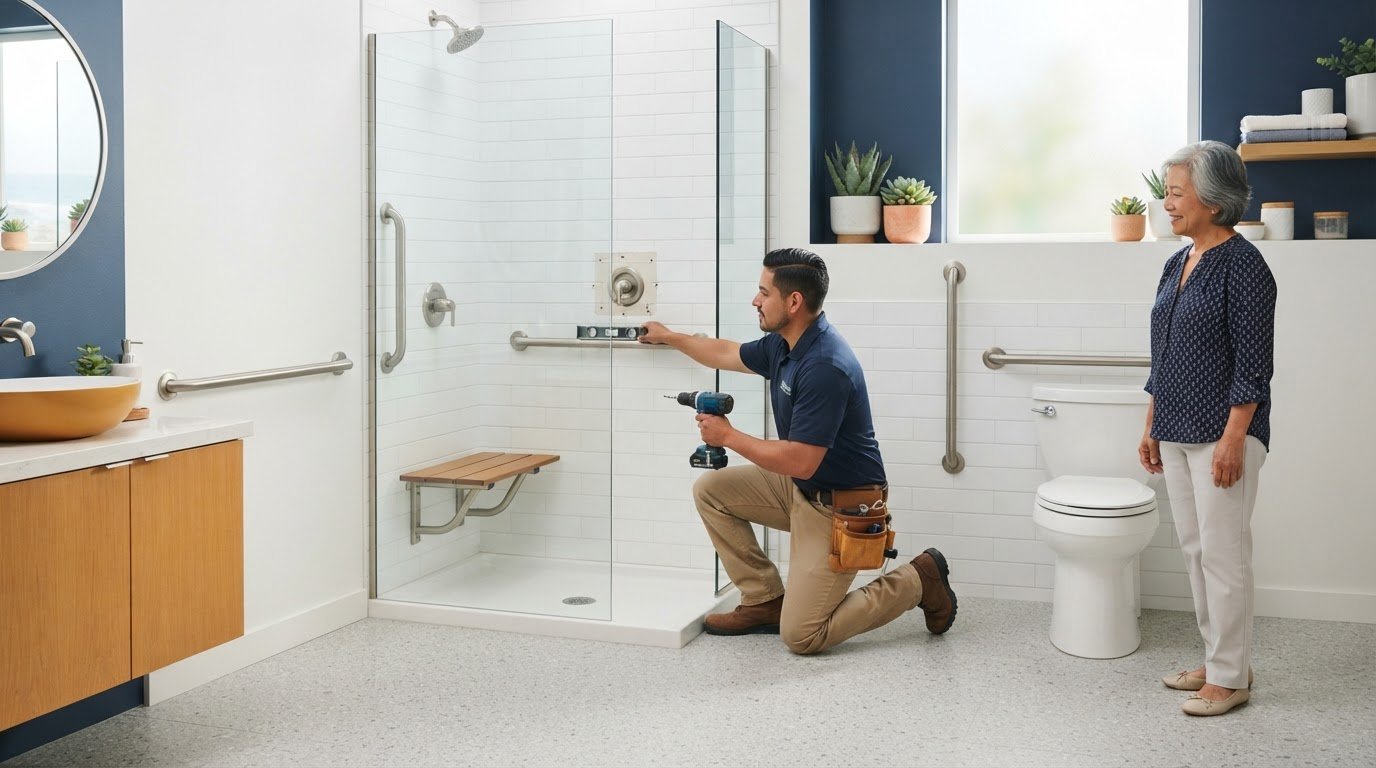
- Entry threshold: Mount an 18-inch vertical bar right at the doorframe or tile jamb to provide an immediate handhold while stepping in or out.
- Sidewall transit: Install a 24- to 36-inch horizontal or slightly angled bar along the main shower wall for continuous balance while washing.
- Valve controls: Position a secondary vertical or horizontal bar beside the faucet trim to prevent unexpected falls while testing water temperatures.
Zone 2: Toilet and Commode Transfer Areas
Standing up from low toilet seats strains tired joints and destabilizes balance. Professional placement calls for a horizontal bar between 24 and 36 inches long mounted along the adjacent sidewall, spaced roughly 12 inches forward from the back wall to match natural sit-to-stand biomechanics. For open layouts lacking a nearby side stud wall, floor-mounted posts or heavy-duty fold-down safety arms offer direct, rigid leverage on demand.
Zone 3: Vanity and High-Traffic Transition Pathways
Water frequently pools between the shower curb, bath mat, and vanity counter, creating hazardous transition zones. Wet hands instinctively reach for fragile towel racks or glass shower doors, but these items rip away under body weight. Mounting low-profile balance rails along dressing walls bridges these gaps cleanly without blocking foot traffic.
Pairing these reinforcements with general home safety assessments helps address hidden trip hazards throughout the property. Homeowners expanding their safety checklist often schedule dedicated California handyman services to handle caulking, door repairs, and fixture installations all at once. If you need custom placement recommendations tailored to your family’s exact bathroom layout, consider having Hardworking Handyman inspect your home’s setup to establish rock-solid support everywhere you walk.
Wall Construction and Hardware: What Makes a Grab Bar Secure?
A safety rail is only as dependable as the wall framing holding it in place. Under federal safety guidelines, every safety rail must withstand at least 250 pounds of sustained pull and shear force. Meeting established ADA standards for grab bars requires mounting hardware that anchors deep into structural framing rather than clinging to thin surface board. A reliable grab bar installation service identifies the specific wall construction before mounting any hardware, ensuring your fixtures never budge under sudden pressure.
Stud Anchoring vs. Hollow-Wall Fasteners
Direct wood stud engagement remains the gold standard for home safety. Driving heavy-gauge stainless steel screws deep into solid framing creates a rigid bond that easily handles sudden, dynamic body weight. Studs don’t always align with optimal ergonomic positions, however. When anchoring to open cavities, professionals deploy engineered commercial hollow-wall toggle systems. These heavy-duty plates span behind the backer board to distribute weight across a wide surface area. Standard plastic expansion plugs and basic drywall anchors must never be used for grab bars; they pull straight out under sudden loading.
Navigating Tile, Fiberglass, and Acrylic Surrounds
Drilling into high-end bathroom surfaces requires precision tools and steady technique. Standard masonry bits or hammer drills easily fracture brittle porcelain, ceramic, or natural stone. Skilled installers use water-cooled, diamond-tipped core bits at controlled speeds to carve crisp, clean holes without cracking surrounding tile. This protects your investment while creating a solid passage to the wall framing.
Fiberglass and acrylic surrounds present different challenges. These shells flex and leave empty voids between the shower wall and framing. Professional installation includes:
- Cavity reinforcement: Installing specialized structural spacers behind the insert to eliminate wall flex and prevent the surround from cracking under torque.
- Watertight barrier sealing: Applying generous beads of mold-resistant, marine-grade silicone around mounting plates to block water from sneaking into wall cavities.
- Corrosion-resistant fasteners: Using premium stainless steel screws that won’t rust or seize in humid shower environments.
Choosing a dedicated grab bar installation service ensures every hole is cleanly drilled, completely waterproofed, and structurally anchored for lasting security.
How to Choose the Right Grab Bar Style, Material, and Finish
Safety hardware should never look like a hospital room. Modern safety rails combine heavy-gauge 304 stainless steel with refined finishes that elevate your space. Grade 304 stainless steel resists intense shower humidity, preventing internal rust from eating away at structural mounting points over time. Choosing a professional grab bar installation service makes it simple to source fixtures that match your existing plumbing trim, whether you have matte black faucets, brushed nickel showerheads, or classic polished chrome.
Diameter and Texture: Designing for Weakened Grips
Grip mechanics determine whether a rail stops a sudden fall or slips right out of your grasp. Standard grab bars come in two primary outer diameters: 1.25 inches and 1.5 inches. Smaller 1.25-inch rails accommodate smaller hands and individuals with severe arthritis, allowing fingers to curl completely around the circumference. Larger 1.5-inch bars provide substantial surface area for broad palms.
Texture matters just as much as diameter when water and soap enter the picture:
- Smooth finishes: Sleek and easy to wipe down, though they provide less mechanical traction when wet.
- Peened textures: Subtle, bead-blasted matte surfaces that add reliable friction without feeling rough on delicate skin.
- Knurled surfaces: Diamond-patterned crosshatching cut directly into the metal for maximum non-slip security under soapy conditions.
Always ensure the bar provides a 1.5-inch clearance from the wall. This spacing leaves ample room for a solid grip while preventing an arm from getting trapped behind the bar during a slip.
Blending Safety Hardware with Modern Bathroom Design
You don’t have to choose between dignified style and personal safety. Contemporary hardware manufacturers offer dual-purpose safety fixtures engineered to full load-bearing standards while performing double duty. Grab bars integrated with corner soap baskets, shampoo shelves, and towel rails blend right into the decor. Concealed flange plates snap cleanly over the mounting brackets, completely hiding the heavy-duty wall screws.
A specialized grab bar installation service helps you select hardware that complements your bathroom design while giving your family total stability.
What to Expect from a Professional Grab Bar Installation Service
Hiring a qualified specialist removes the guesswork from bathroom fall prevention. True safety work involves systematic mapping, structural anchoring, and verification rather than simply drilling holes and walking away. A professional grab bar installation service provides an end-to-end process that protects your walls, hides mounting points cleanly, and ensures the fixture supports real weight immediately. Homeowners across Los Angeles, Orange County, Pasadena, Arcadia, and the San Gabriel Valley rely on this structured approach to safeguard their spaces.
The On-Site Consultation and Custom Mapping
Work begins with an ergonomic assessment tailored to the person using the room. The technician evaluates stepping stride, grip reach, and dominant-hand preferences during actual tub or commode transitions. Next, sensitive multi-sensor scanners map the internal wall framing. This step pinpoints wood studs while identifying hidden copper water lines, vent pipes, and electrical wiring concealed behind the wallboard. Before any tools touch the wall, the installer dry-fits each bar at the intended angle so the homeowner can confirm comfort and reach.
Precision Installation and Site Cleanup
Once placement is set, execution follows exact trade practices:
- Targeted penetration: Specialized diamond masonry bits grind smoothly through ceramic, stone, or fiberglass without chipping glaze or cracking grout joints.
- Structural fastening: Heavy-gauge stainless steel fasteners drive directly into solid wood framing or engage commercial-grade toggle assemblies.
- Sanitary cleanup: Technicians clear away masonry dust, wipe the work area spotless, and apply clean silicone beads.
- Physical load certification: The technician applies dynamic pull and shear force to the bar, confirming it holds firm under sudden pressure before signing off on the job.
Questions to Ask Before Hiring an Installer
Protecting your home and family means vetting your technician carefully before work starts. Ask these practical questions during your initial call:
- “How do you handle drilling through my specific wall material?” Make sure they carry specialized diamond core bits for delicate porcelain or structural backing for flexible fiberglass inserts.
- “Do you physically load-test every bar after mounting?” Never settle for visual checks. Technicians must mechanically pull-test each bracket.
- “Can you accommodate urgent scheduling?” When family members return home from medical procedures, same-day service availability provides critical safety upgrades without dangerous delays.
Ready to secure your home? Homeowners throughout Pasadena and surrounding communities can book a professional safety assessment to get dependable, properly anchored grab bars installed right away.
Secure Your Bathroom with Lasting Fall Protection
Preventing dangerous bathroom falls starts with structural stability. Towel racks and suction cups can’t protect your loved ones when wet tile causes a sudden slip. Reliable fall prevention requires anchored safety rails engineered to support full dynamic body weight. Investing in a professional grab bar installation service gives your family immediate reassurance without compromising the beauty of your living space.
You don’t have to risk cracked porcelain or hidden water damage behind your walls. Skilled craftsmen handle delicate tile, natural stone, and fiberglass surrounds with clean diamond drilling, ensuring every mount is watertight and rock solid. Homeowners across Pasadena, Arcadia, and the San Gabriel Valley count on prompt, dependable service to protect aging family members and preserve independent living.
Take this vital step today to ensure everyone in your home moves with steady footing and complete safety.
Frequently Asked Questions
Can grab bars be securely installed into fiberglass or acrylic shower walls?
Yes, grab bars can be securely mounted to fiberglass or acrylic shower walls using specialized structural backing or heavy-duty hollow-wall anchors. Because these prefabricated units flex, professional installers insert solid reinforcement spacers between the insert and framing. This prevents the wall from bowing or cracking under load. It ensures the finished rail remains rigid, watertight, and fully capable of supporting dynamic body weight.
What is the recommended height for installing a bathroom grab bar?
The standard recommended mounting height is between 33 and 36 inches from the finished bathroom floor to the top of the gripping surface. This follows ADA federal standards for general accessibility. In private residences, technicians often fine-tune this height based on the user’s specific stature, balance needs, and range of motion. Custom placement ensures natural leverage when entering tubs or standing up from commodes.
How much weight can a professionally installed grab bar support?
A professionally installed grab bar is engineered to support at least 250 pounds of sustained pull and shear force. When anchored directly into structural wood framing or commercial toggle plates, many heavy-duty stainless steel bars hold well over 400 pounds. This high threshold provides vital fall-arrest protection, ensuring the fixture stays firmly attached to the wall even during sudden, high-impact slips.
Can grab bars be mounted if there are no wood studs where I need support?
Yes, grab bars can be safely mounted without wood studs using commercial-grade hollow-wall toggle anchors. These specialized mounting plates distribute pulling forces across a broader section of the backer board rather than relying on weak drywall screws. When using a professional grab bar installation service, technicians inspect the cavity structure and use verified anchoring hardware designed specifically for heavy weight-bearing applications.
Will drilling holes for safety bars damage or crack my bathroom tile?
No, professional drilling will not crack or damage your bathroom tile when done with proper tools and techniques. Installers use specialized diamond-tipped core drill bits operated at low speeds with water cooling. This method gently grinds through dense porcelain, ceramic, or natural marble without fracturing the glaze or surrounding grout lines. Every penetration is then sealed with waterproof silicone to prevent moisture damage.
What is the difference between an ADA grab bar and a standard towel bar?
An ADA grab bar is structural safety hardware built from thick-gauge stainless steel and rated to hold at least 250 pounds of force. Standard towel bars are purely decorative, made from thin hollow tubing, and held in place by tiny setscrews and plastic drywall anchors. Towel bars easily snap or pull out of the wall if gripped during a fall, creating a serious hazard.
How long does a professional grab bar installation service take?
A typical grab bar installation service visit takes between one and two hours to complete. This timeline includes the initial mobility assessment, electronic stud mapping, precision diamond drilling, watertight caulking, and physical weight-testing. Homeowners across Pasadena, Arcadia, and the San Gabriel Valley can also request same-day service availability for urgent safety needs when family members return home from medical care.