
Article by
Hardworking Handyman LLC
Hardworking Handyman™ brings decades of hands-on experience in home repair, construction, mechanical work, property maintenance, and troubleshooting. Our practical approach comes from years of working directly with homes, equipment, repairs, and real-world projects—not just writing about them. Hardworking Handyman™ serves homeowners, landlords, Realtors, and property managers throughout the San Francisco Bay Area, East Bay, and Tri-Valley, including Dublin, Pleasanton, Livermore, San Ramon, Danville, Fremont, Castro Valley, and surrounding communities. We specialize in everyday home repairs, doors, drywall, painting, fixture installation, rental turnovers, apartment maintenance, and general property maintenance. Our articles are designed to share practical home-repair knowledge, maintenance tips, and firsthand insight that helps property owners understand their homes and make informed repair decisions.
What if rental maintenance stopped feeling like a scramble and became a routine you could rely on? For landlords, unclear priorities and scattered tenant reports can let small repairs linger until they affect safety, habitability, or a smooth turnover. This rental property maintenance Bay Area guide starts with a simple system: inspect regularly, record requests clearly, and decide what needs attention first.
You don’t need to handle every task alone. A consistent process helps you coordinate tenant reports, inspections, and repair visits, while a dependable local contact can take on suitable small repairs and turnover work. Here, you’ll learn how to build a practical maintenance routine, document and prioritize repair requests, and recognize when a repair needs specialized attention or a check of local requirements. The goal is less guesswork and a rental that stays safe, functional, and ready for its next chapter.
Key Takeaways
- Build a seasonal inspection routine around each property’s needs, with attention to drainage, exterior openings, plumbing leaks, and safety devices.
- Use a consistent repair sequence: assess safety, limit further damage, document the issue, assign the work, and follow up.
- Address hazards and time-sensitive repairs before routine cosmetic work so important requests don’t get lost.
- For rental property maintenance Bay Area owners can manage more smoothly, match each task to the right help and confirm service-area coverage and qualifications.
- Group suitable routine repairs or turnover items into one clear request, then record what was completed.
Rental Property Maintenance in the Bay Area: What Owners Need to Manage
Rental maintenance is the ongoing work of keeping a property functional and responding to problems as they arise. It combines scheduled upkeep, tenant requests, and timely repair coordination. A repeatable approach helps owners spot concerns, assign suitable work, and keep a clear record instead of relying on memory.
A rental maintenance plan is a simple system for checking the property, tracking repair requests, and following each issue through to completion. Preventive attention can help limit disruption, but it can’t guarantee that breakdowns or urgent repairs won’t happen. Owners should also understand the responsibilities tied to a rental arrangement. For background on the legal basis for renting, see Wikipedia’s overview of leasehold estates.
For a general look at property maintenance and repair services, watch this video:
What belongs in a rental maintenance plan?
Organize work into three groups: recurring inspections, tenant-reported repairs, and tasks between tenancies. For each issue, record what’s wrong, where it is, when it was reported, its urgency, who is handling it, and how it was resolved. Dated photos and status updates can clarify the condition and make follow-up easier.
Distinguish manageable repairs from warning signs. A loose cabinet handle or minor drywall patch may suit a handyman. An immediate safety concern, active leak, or problem involving specialized systems needs prompt assessment by an appropriately qualified professional. Confirm the right trade and qualifications before assigning the work. Hardworking Handyman™ LLC lists California handyman services that include selected repair, installation, apartment maintenance, and rental turnover tasks.
Why Bay Area rentals need property-specific checks
Inspection priorities depend on the property, not just its city. Coastal exposure may make exterior openings and visible material wear worth checking. A hillside property may call for closer attention to drainage, while heat in an inland area may shape which seasonal checks are useful. Treat these as prompts, not assumptions about every address.
Adjust the plan for building age, materials, occupancy, and repair history. A property with repeated plumbing leaks needs different follow-up from one with a record of exterior wear. Conditions can vary across the San Francisco Bay Area and Tri-Valley, so review the checklist as the home’s condition and history change.
Build a Seasonal Bay Area Rental Maintenance Checklist
A seasonal checklist gives you a consistent way to spot visible issues before they become harder to manage. Treat it as a set of prompts, not a fixed schedule for every rental. Local conditions, building materials, and past repairs should determine what you inspect and when. For rental property maintenance across the Bay Area, keep a reusable checklist for each address and update it as conditions change.
What to check before and during the rainy season
Before wet weather, look for visible drainage blockages, signs of water intrusion, and worn or damaged seals around exterior openings. Check roof and exterior surfaces only where they can be viewed safely. During and after rain, note new stains, damp areas, or other changes that could indicate a leak. Document suspected water intrusion promptly and arrange a qualified assessment when the cause or repair is beyond your scope. Consider the property’s materials and exposure when planning exterior upkeep.
What to review during routine occupancy
Keep a clear channel for tenant reports about leaks, doors, fixtures, and visible damage. Log each request with the date, location, description, urgency, next step, and completion notes. Add dated photos when useful, while protecting tenant privacy. Before entering an occupied unit, check the applicable entry rules and give any required notice. The University of California, Berkeley’s Bay Area tenant rights resources may help readers find housing-related information; confirm current requirements for the property’s location.
Include safety devices in your review. California requirements call for smoke detectors in every sleeping area and on every floor of a rental unit. Carbon monoxide detectors are required in dwellings with a fossil-fuel appliance, attached garage, or fireplace. Check which requirements apply to the specific property and confirm devices are present and working.
A reusable checklist for each property
Copy this short list for seasonal checks, routine occupancy, and tenancy changes. Mark items “not applicable” where the feature isn’t present, and add property-specific tasks as needed.
- Roof and drainage: Note visible damage, blockages, or signs of water entry.
- Exterior openings: Record worn seals or damage, considering the property’s exposure and materials.
- Plumbing: Check reported leaks and note any visible signs of moisture.
- Safety devices: Record the status of smoke and carbon monoxide detectors as applicable.
- Follow-up: Date observations, attach relevant photos, assign next steps, and record completed work.
For suitable small repairs or turnover tasks identified during an inspection, you can review local rental maintenance services. Confirm task suitability and coverage for the property address before scheduling.
How to Prioritize Bay Area Rental Repairs Without Guesswork
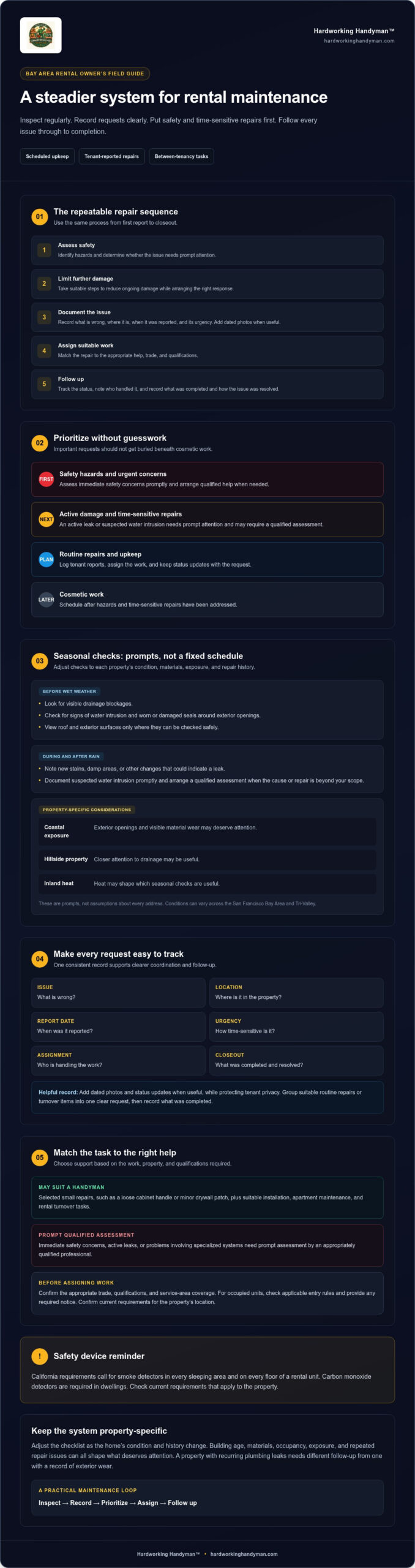
A tenant report can range from a dripping faucet to a possible safety hazard. Use the same sequence every time: assess safety, limit further damage if it’s safe to do so, document the issue, assign the right professional, then follow up until it’s resolved. This keeps decisions consistent and gives you a clear record of what happened.
Prioritize a rental repair by addressing safety first, preventing further damage next, and scheduling routine work after urgent issues are under control. Ask the tenant for a clear description, the affected area, when the problem began, and photos if appropriate. Don’t ask tenants to investigate anything that could put them at risk.
Which rental maintenance issues need prompt attention?
Suspected gas, electrical, structural, or major water hazards need prompt assessment by an appropriate specialist. For an immediate threat, direct people to safety and contact emergency services or the relevant utility as appropriate. An active leak or loss of an essential service also calls for timely action and qualified help. Don’t assume a general handyman is the right person for every issue.
Separate urgent hazards from time-sensitive repairs and routine cosmetic work. A safety concern or active leak needs escalation; a worsening door problem or fixture issue may need prompt scheduling; a small paint scuff can usually wait for planned work. Response duties and deadlines can depend on current California and local requirements, so verify the rules that apply to the property rather than relying on a general timeline.
Which tasks can be grouped into a repair visit?
Group suitable, clearly related minor tasks to make a visit easier to plan. Examples may include a drywall patch, a door adjustment, and a listed fixture update. Send a room-by-room list with photos, note which items are urgent, and ask which tasks fit the provider’s services. Hardworking Handyman™ LLC lists California handyman services that include drywall repair, door work, and fixture installation. Confirm task suitability and address coverage before scheduling.
Don’t bundle work just for convenience if it needs separate permits, licenses, or specialist expertise. A problem involving major water damage, electrical systems, gas, or structural safety may require a qualified trade professional. Keep it separate, explain what’s known, and confirm who is equipped to assess it.
Close the loop by recording who was assigned, the next step, and the completion date. Confirm with the tenant that the reported issue was addressed, and note any follow-up work. A consistent process makes rental property maintenance easier to track, even when several requests come in at once.
Choose Bay Area Rental Maintenance Help That Fits the Property
The right provider depends on the task, not just the property. Before assigning work, check whether the provider handles that specific repair, communicates clearly, documents completed work, and currently serves the property’s address. For work that may require a trade license or permit, verify the requirements for the exact scope and location.
A handyman can be a practical choice for suitable listed repairs and installations, such as drywall repair, door work, or fixture installation. That doesn’t make a handyman the right fit for every issue. Full electrical rewiring, HVAC system installation, and major structural work need appropriate specialists.
Questions to ask before scheduling rental repairs
Share the address, a clear description of the issue, and photos if useful. Ask which parts of the request fit the provider’s services and whether another professional should handle any items. Clarify how estimates are prepared, how tenant access will be arranged, what work documentation you’ll receive, and what scheduling options are available. Confirm current service-area coverage for the specific address.
When to use handyman support and when to escalate
Use handyman support for suitable minor repairs or installations within the provider’s listed offerings. Escalate suspected structural problems, HVAC issues, full rewiring, or other work requiring specialist expertise. Don’t combine specialist work with a handyman request simply for convenience. Check local licensing and permit requirements before assigning work, and ask the provider to confirm task suitability.
| Task type | Typical fit | What to verify |
|---|---|---|
| Drywall patch, door repair, or listed fixture installation | Handyman, if the task is within the provider’s services | Exact task fit, estimate process, service-area coverage, and documentation |
| Full rewiring, HVAC installation, or major structural work | Appropriately qualified specialist | Required trade qualifications, permits, and scope |
| Unclear or potentially hazardous issue | Qualified professional for assessment | Who is equipped to inspect it and what local requirements apply |
For rental property maintenance across the Bay Area, choosing help this way can make repair coordination clearer for individual homes and multiple units. Review California handyman services to see examples of listed repair and installation work, and confirm suitability and availability for your property before scheduling. Hardworking Handyman™ LLC lists rental turnover, apartment maintenance, and handyman repair services. Confirm current coverage for your address.
Make Rental Property Maintenance Easier with a Reliable Local Workflow
A shared workflow helps owners and property managers move requests from report to resolution. Use one log for every property, then follow the same steps: collect the request, inspect appropriately, set its priority, assign the right help, arrange access, and record completion. This gives everyone a clear view of what’s open and what still needs follow-up.
A repeatable workflow for owners and property managers
Keep one request log for each property or use a shared system with clear property labels. Record the issue, location, date reported, priority, access arrangements, assigned provider, and current status. Group suitable non-urgent tasks where practical, but handle safety concerns and specialist work separately. After the repair, add completion notes and relevant records, such as photos or the provider’s summary.
For multiple units, consistent records make it easier to spot repeat issues and prepare for turnover. They also help prevent a request from disappearing when responsibility passes between a tenant, owner, manager, and repair provider. Keep updates factual and note any next step if the first visit doesn’t resolve the problem.
Prepare a clear maintenance request
Give the provider useful details before asking them to schedule. List each issue separately, identify the room or area, say when it began, and describe any change over time. Add clear photos where appropriate, but avoid including private belongings or people unless necessary. Confirm access arrangements with occupants and follow applicable entry requirements.
Before booking, ask whether the property address is within the provider’s current service area and whether each task fits their listed services. Hardworking Handyman™ LLC supports rental turnover and apartment maintenance, with listed work such as drywall repair, door work, fixture installation, and interior painting. Owners in the Tri-Valley, including Dublin, Pleasanton, Livermore, San Ramon, and Danville, can review the company’s California handyman services and confirm current coverage for their specific address. Service areas and task suitability should be checked before scheduling.
A well-prepared request makes rental property maintenance easier to coordinate. It gives the provider a clearer picture of the work, helps distinguish handyman tasks from specialist issues, and gives you a record to update when the job is complete. Keep the process steady: log it, assess it, assign it, and close it with notes.
Put a Steady Rental Maintenance Routine in Place
Good rental property maintenance starts with a repeatable process: inspect with the property’s needs in mind, log tenant requests, prioritize safety and active damage, and record repairs through completion. A clear system helps you coordinate routine upkeep and recognize when a task needs a qualified specialist.
Hardworking Handyman™ lists rental turnover and apartment maintenance, along with repair and installation tasks such as drywall repair, door work, and fixtures. The business also notes free estimates and same-day availability for urgent maintenance. Confirm the scope and availability for your specific request and property address.
Start with one property, set up a simple request log, and build from there. Each clear record and completed repair makes the next decision easier.
A practical routine can bring more clarity to property upkeep, one request at a time.
Frequently Asked Questions
How often should a rental property be inspected in the Bay Area?
There’s no single inspection schedule that fits every rental. Set a routine based on the property’s age, condition, previous issues, and local exposure, then respond to tenant reports as they arise. Before entering an occupied unit, check current California and local rules, lease terms, notice requirements, and any emergency exceptions. Keep dated records of inspections and follow-up work. A property-specific rental maintenance plan can help you stay organized.
What maintenance should landlords do before the rainy season in the Bay Area?
Before the rainy season, review visible drainage, roof or ceiling signs of water intrusion, exterior seals, and previously reported leaks. Adjust checks to the building’s materials, location, and repair history rather than assuming every property needs the same inspection. Document concerns and arrange a qualified assessment if you suspect damage. A checklist is a useful prompt, but it doesn’t replace professional inspection or checking current local requirements.
What rental repairs should be handled first?
Assess immediate safety concerns first, then address problems that could cause further damage, such as an active leak. Schedule time-sensitive repairs next, followed by routine or cosmetic work. If the cause or severity is unclear, arrange an assessment by an appropriate professional instead of guessing. Response obligations can depend on current California and local rules, so verify the requirements for your property rather than relying on a generic repair-priority list.
Can a handyman handle rental property maintenance in the Bay Area?
A handyman may be suitable for listed minor repairs and installation tasks, such as drywall patching, door work, or certain fixture updates. The exact scope matters. Refer major structural work, HVAC installation, full electrical rewiring, and tasks requiring specialist qualifications to appropriate providers. Before scheduling, confirm that the handyman handles the requested work and serves the property’s address. Don’t assume every maintenance concern belongs in a general handyman visit.
How should landlords track maintenance requests from tenants?
Use one written log for each property. Record the report date, tenant’s description, affected area, urgency, access arrangements, assigned provider, and completion notes. Add photos when appropriate and suitable. A consistent record helps you track follow-up and notice recurring issues, such as repeated leaks in the same area. Handle personal information responsibly, and check applicable privacy and entry requirements before setting up an inspection or documentation process.
What should I ask a rental maintenance provider before hiring them?
Confirm whether the property address is within the provider’s current service area and whether the requested tasks match its listed offerings. Clarify the estimate process, scheduling, access arrangements, and what completion records you’ll receive. For specialist or regulated work, ask which qualifications and permits may be needed. Hardworking Handyman™ lists rental turnover, apartment maintenance, and repair services for property owners and managers. Confirm current coverage for your address in the San Francisco Bay Area, Tri-Valley, Dublin, Pleasanton, Livermore, San Ramon, Danville, Fremont, Castro Valley, or Hayward.
Do Bay Area rental maintenance requirements vary by city?
Yes, requirements can depend on state law, local ordinances, property type, and the repair involved. Don’t assume rules in San Francisco, Oakland, or another city apply throughout the Bay Area or Tri-Valley. Check current official state and local sources for the property’s location, or consult a qualified housing professional about legal questions. This guide offers practical upkeep guidance, not legal advice or a substitute for verifying current requirements.
How can I prepare a rental property for a new tenant?
Walk through the unit, document its condition, review open repair requests, and create a prioritized list of suitable maintenance and turnover tasks. Check doors, fixtures, visible wall damage, and applicable safety devices. Confirm current requirements before making compliance decisions. Hardworking Handyman™ lists rental turnover and apartment maintenance services, along with tasks such as drywall repair, door work, and fixture installation. Confirm that each task fits the service and that the property address is covered before scheduling.