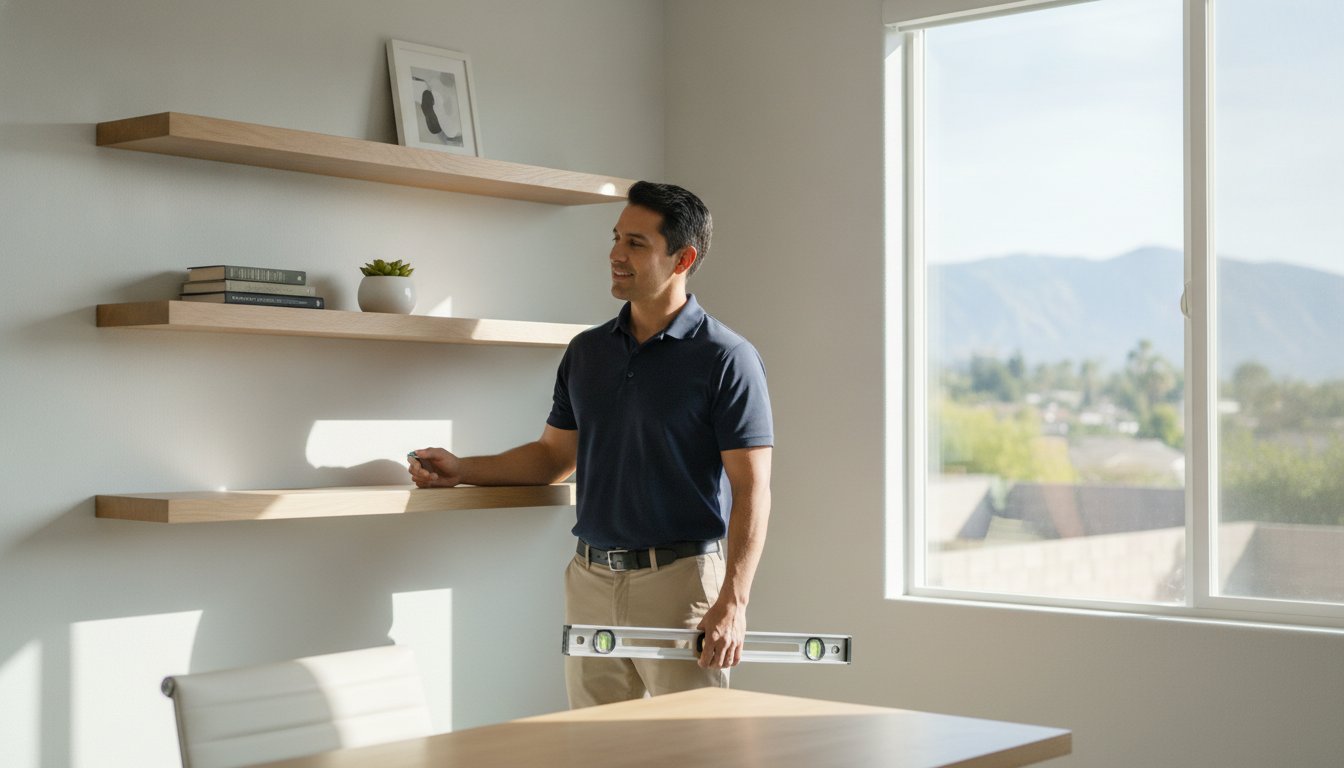
A shelf is a structural load-bearing system, not just a piece of wood screwed into a wall. It relies on the density of your home’s walls and the exact precision of your mounting hardware. Most homeowners recognize the frustration of a crooked DIY attempt or the worry of seeing a bracket pull away from the drywall. Eliminate the stress of wondering if your storage will hold or if it’s about to collapse.
Investing in professional shelving installation ensures your storage stays level and secure for years. Master the art of home storage with clear advice on weight capacities and expert mounting techniques. Choose the best shelving types for your space and select the correct anchors for your specific wall material. Whether you’re prepping a rental turnover in Pasadena or organizing a home office in Arcadia, use this resource to gain the technical knowledge needed for stable, reliable storage. Achieve damage-free walls and optimized organization throughout your home with these proven methods.
Key Takeaways
- Professional shelving installation acts as a structural home upgrade that prevents wall failure and uneven weight distribution.
- Identify the differences between drywall, plaster, and masonry to select the correct mounting hardware for every room.
- Compare the aesthetic benefits of floating shelves against the high weight capacity of fixed bracket systems for pantries and closets.
- Implement a “Rental-Ready” storage strategy to minimize tenant damage and streamline maintenance for property managers.
- Ensure your shelves are level and secure by following the essential “Golden Rule” of mounting directly into wall studs.
Why Professional Shelving Installation Beats the DIY Approach
A shelf that looks fine on installation day can become a liability within months. The difference between a secure shelf and a dangerous one often comes down to decisions made in the first five minutes: where to drill, which anchor to use, and how to distribute the load. Professional shelving installation treats these decisions as structural choices, not guesswork.
Professionals bring tools that change the outcome. A laser level eliminates the “eyeball” method that produces shelves sitting a quarter-inch off. A quality stud finder locates the framing behind the drywall so every bracket is anchored into solid wood, not hollow air. An impact driver sets fasteners at consistent torque, preventing the over-tightening that strips drywall and the under-tightening that lets brackets shift. These aren’t luxury tools; they’re the baseline for a shelf that actually holds.
Common Pitfalls of Amateur Shelf Mounting
DIY shelf attempts often leave walls worse than before. Each failed drill hole weakens the surrounding drywall, and a wall with four or five patched attempts loses structural integrity in that zone. This is the “Swiss Cheese” effect: a cluster of damaged spots that can’t reliably hold an anchor, forcing the next attempt further along the wall and compounding the problem.
Weight distribution is the other major failure point. Most homeowners mount brackets based on aesthetics, spacing them evenly for appearance rather than placing them directly over studs. Brackets set in drywall alone rely entirely on the anchor’s grip in crumbling gypsum. Add a full row of books or kitchen items, and that grip fails. Understanding the different types of shelf supports and how each one transfers load to the wall is foundational knowledge that separates a safe installation from a risky one.
Then there’s the aesthetic cost. A shelf that’s slightly off-level is impossible to ignore once items are placed on it. Objects slide. Frames look crooked. The visual effect undermines the entire room.
Long-Term Benefits for Homeowners and Landlords
For property managers handling rental turnovers in Pasadena or Arcadia, secure shelving reduces liability and cuts maintenance callbacks. A shelf installed correctly the first time doesn’t generate a repair ticket six months later. For homeowners, the benefit is simpler: heavy items like cookbooks, kitchenware, and tool storage stay exactly where they’re put, safely and reliably.
- Rental properties: Professionally mounted shelving reduces tenant-caused wall damage and simplifies make-ready turnovers.
- Small floor plans: Custom shelf placement maximizes vertical storage in compact San Gabriel Valley homes where floor space is limited.
- Heavy loads: Books, pantry goods, and tools require stud-anchored systems that only a proper installation delivers.
The bottom line is straightforward. Done right, shelving adds functional value and visual appeal. Done wrong, it creates repair costs and safety risks. Professional installation eliminates both concerns from the start.
The Science of Stability: Anchors, Studs, and Wall Types
The wall behind your paint is the most critical component of any storage project. Understanding whether you’re working with drywall, plaster, or masonry determines the entire approach. In modern construction, drywall is the standard material. It’s essentially paper and gypsum, which means it lacks the inherent strength to hold heavy loads on its own. Masonry, often found in industrial lofts or on exterior walls, requires specialized masonry bits and hardened concrete screws to ensure a secure fit.
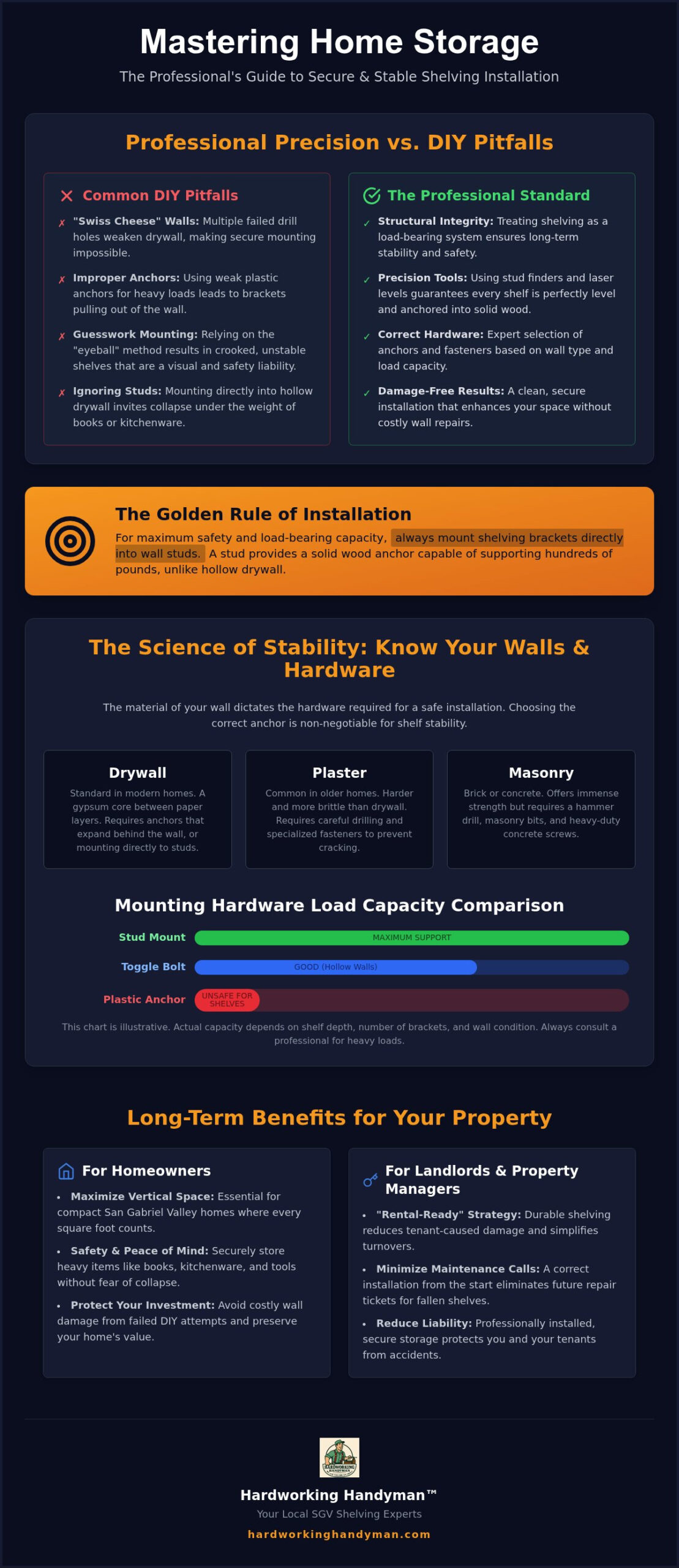
The Golden Rule of professional shelving installation is simple: always hit a stud. A standard 2×4 wood stud provides a solid anchor point that can support hundreds of pounds. When you bypass the stud, you’re betting the safety of your items on the strength of the wall surface alone. This is rarely a winning bet for heavy books or kitchen equipment.
Load-bearing capacity in residential shelving refers to the maximum weight a mounting system can safely support before the fastener shears or the wall material suffers structural failure.
Calculating this capacity requires looking at the shelf depth, the number of brackets used, and the specific fastener type. Deeper shelves create more leverage. This leverage increases the pull on the top screw of a bracket, making stud placement even more vital for deep pantry or garage storage.
Choosing the Right Hardware for the Job
Toggle bolts are the champions of hollow walls. They feature a spring-loaded wing that opens inside the wall, spreading the load across a wider area of the drywall’s backside. Plastic anchors are acceptable for a light picture frame, but they shouldn’t be used for shelving. Heavy-duty mollies provide a permanent threaded socket in the wall. These offer much better stability than plastic options. For modern lofts with brick or concrete, specialty masonry fasteners are required to bite into the dense material without cracking the surface.
Special Considerations for Older SGV Homes
In historic Pasadena and Arcadia, lath and plaster walls present unique challenges. Plaster is brittle. It cracks easily under the vibration of a standard drill bit. Standard anchors often fail because the plaster crumbles behind the surface, leaving the fastener loose and unstable. If you encounter structural issues or significant cracking during a project, integrating drywall repair is the best way to restore the wall’s integrity before proceeding with new shelving.
Ensuring your storage is safe starts with a technical assessment of your home’s framing. If you want to ensure your project is handled with precision, reach out to a local expert who understands the specific needs of San Gabriel Valley homes and can provide a secure, professional shelving installation.
Professional Shelving Types and Storage Solutions
Selecting the right storage system requires a clear understanding of both the room’s function and the weight of the items you plan to store. Professional shelving installation ensures that the hardware you choose is compatible with your wall’s structure and your storage goals. Picking the wrong system for a heavy load is a common mistake that leads to wall damage and broken items.
Floating shelves are a top choice for modern interiors. They provide a clean, minimalist look with no visible supports. However, they are prone to sagging if the internal mounting bracket isn’t perfectly secured to the studs. The lever effect on a floating shelf is significant; even a small amount of weight can pull the bracket out of the wall if it’s only anchored in drywall. These require precision to ensure they sit flush against the wall without a gap.
Fixed bracket shelving is the reliable choice for high-traffic areas like pantries and walk-in closets. The visible support bracket offers the highest weight-bearing capacity. Use these when you need to store heavy kitchen appliances, large book collections, or bulk pantry goods. The brackets transfer the weight directly into the wall framing, providing a stable and long-term solution.
Adjustable track systems offer unmatched versatility. Vertical standards are mounted to the wall, allowing you to click brackets into place at any height. This system is perfect for children’s rooms where storage needs change as they grow. It’s also an efficient way to organize a home office or a craft room where item sizes vary. Built-in bookcases transform empty wall space into a permanent home library. These units are often custom-fitted to the room’s dimensions, providing a high-end look that increases the overall value of your property.
Maximizing Utility in the Garage and Utility Room
Overhead storage racks are essential for reclaiming floor space in your garage. Lifting bins and seasonal gear to the ceiling allows you to park your vehicles without navigating clutter. For heavy tools and equipment, industrial-strength steel shelving is the safest option. In laundry rooms or mudrooms, moisture is a constant factor. Choose shelving materials with water-resistant finishes to prevent the wood from warping or delaminating over time.
Aesthetic and Decorative Shelving Trends
Live edge wood shelves are a popular trend in San Gabriel Valley homes. These natural slabs add warmth and a modern rustic character to living rooms. Because these slabs are often quite heavy, they require specialized mounting hardware and deep stud penetration. Glass shelving is an excellent choice for display cases or small bathrooms. It allows light to pass through, keeping the room feeling bright and open. Adding integrated LED lighting to your shelves can highlight a collection and add a sophisticated touch to your interior design.
Planning Your Project: A Resource for Landlords and Property Managers
Landlords in the San Gabriel Valley face a recurring problem: tenant-installed shelves that destroy drywall. Implementing a “Rental-Ready” strategy prevents this. You provide high-quality, pre-installed storage so tenants don’t feel the need to drill their own holes. Professional shelving installation during your next vacancy ensures the work meets a standard that survives multiple tenancies. It’s a proactive move that protects your asset from unnecessary damage.
Integrating these upgrades into your rental turnover services saves time. It also protects your investment. When a unit is empty, you have the perfect window to address storage needs. You can get the work done quickly without moving furniture. This efficiency is vital for maintaining high occupancy rates in competitive markets like Pasadena and Arcadia.
Use this checklist for planning a multi-unit shelving upgrade:
- Audit wall types across all units to determine specific hardware needs.
- Standardize your shelving style to simplify future repairs or replacements.
- Map out electrical lines, plumbing, and existing wall-mounted TVs.
- Group installations by building or floor to maximize labor efficiency.
- Create a clear load-limit guide for tenants to include in the lease agreement.
Measuring and Layout Optimization
Accessibility is the goal for any layout. Follow the “Eye Level” rule by placing primary shelves between 57 and 60 inches from the floor. This height works for the majority of users. For pantries, maintain a clearance of 10 to 12 inches between shelves. This accommodates standard cereal boxes and small kitchen appliances. Always account for the swing of closet doors and the location of light switches to avoid blocking access to essential controls.
Budgeting and Material Selection
Material choice impacts your long-term maintenance costs. Wire shelving is a cost-effective option. It works well for closets but can feel flimsy to some tenants. Solid wood is durable and adds a premium feel but requires a higher initial investment. MDF is a great middle ground for painted pantry shelves because it’s stable and uniform. Investing in professional hardware now saves money later. You won’t spend as much on drywall patching and repainting when tenants move out. Bulk installations across several units lower your per-unit labor costs significantly.
Hardworking Handyman™: Your Local SGV Shelving Experts
Hardworking Handyman™ serves as your dedicated partner for home maintenance and organization. We’ve built deep roots in Arcadia, Pasadena, and throughout the San Gabriel Valley. Our team understands the specific construction styles of local homes, from historic lath and plaster to modern drywall. We don’t just show up; we get to work immediately to solve your storage problems. Reliability is our baseline standard, and we take pride in being a dependable local resource for every resident.
We prioritize professional competence and dependability in every task. Your time is valuable, so we focus on efficiency and results. For property managers, our same-day service availability is a critical asset for rental property make-ready projects. A fast turnover means less vacancy time and a better experience for your incoming tenants. We provide free estimates and maintain transparent, affordable pricing for every project. You’ll know exactly what the professional shelving installation involves before we ever pick up a tool.
The Hardworking Handyman™ Process
- Step 1: On-site assessment. We start by evaluating the wall integrity and the specific storage needs of your room. We locate studs and identify if we’re working with plaster, masonry, or drywall to ensure a secure mount.
- Step 2: Precise measurement and hardware selection. We select the exact fasteners and brackets needed to support your intended load. This ensures your shelves stay level and secure for years to come.
- Step 3: Clean, dust-controlled installation. We take care to protect your home. We use drop cloths and dust-collection tools to ensure your space stays clean while we work.
Ready to Organize Your Space?
Scheduling your free estimate is simple and direct. We serve neighbors in Monrovia, Alhambra, and West Covina with the same punctual and skilled approach. You can easily combine your project with our other California handyman services. This allows you to handle your entire maintenance list in a single, efficient visit. Whether you need drywall repair, fixture installation, or a full professional shelving installation, we have the skills to get it done.
Don’t let clutter take over your home or office. Reclaim your space today with professional help that you can trust. Contact us to schedule your service and experience the difference of working with a diligent, local expert who values your time and your property.
Reclaim Your Space with Secure Storage
Safe and level shelving transforms a chaotic room into a functional asset. You now understand that stability relies on the science of wall types and the precision of stud placement. Avoiding the common pitfalls of DIY attempts protects your drywall and ensures your heavy items stay supported. Choosing professional shelving installation is an investment in your home’s longevity and your own peace of mind.
Hardworking Handyman™ has served Arcadia and Pasadena for over 10 years. We take pride in our 5-star rated local craftsmanship and our commitment to getting the job done right the first time. If you have an urgent repair or a tight rental turnover schedule, our same-day service availability ensures your project stays on track. We’re ready to bring our get-to-work efficiency to your next organization project.
Take the first step toward a more organized and stress-free home today. Our team is standing by to help you build the stable, high-quality storage your space deserves.
Frequently Asked Questions
How much weight can a professionally installed floating shelf hold?
A professionally installed floating shelf typically supports between 30 and 75 pounds depending on the bracket design and shelf depth. This capacity assumes the internal support is secured directly into at least two wall studs. If the shelf is only attached to drywall with anchors, the capacity drops significantly and risks pulling the gypsum apart. Always verify the manufacturer’s specific rating for the unit before placing heavy kitchen appliances or large book collections on it.
Do I really need to find a stud to hang a shelf?
Finding a stud is the only way to ensure a shelf can handle a significant load without failing. While heavy duty toggle bolts can support lighter decorative items in hollow drywall, they don’t offer the structural integrity of a wood screw driven into a 2×4 frame. For any professional shelving installation involving pantry goods, tools, or electronics, stud attachment is mandatory to prevent the brackets from eventually sagging or pulling out of the wall.
Can you install shelves on plaster walls without them cracking?
Installing shelves on plaster requires specialized masonry drill bits and a slow, steady approach to prevent the brittle surface from shattering. We use high quality bits to create clean pilot holes through the plaster and lath layers before driving fasteners. This technique minimizes the vibration that causes spiderweb cracks in older San Gabriel Valley homes. Using the correct anchors designed for lath and plaster ensures a tight fit that standard drywall anchors simply cannot provide.
How long does a typical professional shelving installation take?
Most standard shelving projects take between one and three hours to complete depending on the number of units and wall material. A single closet system or a set of floating shelves in a living room typically falls within this timeframe. More complex built-in units or garage racks might require a full afternoon. Our “get-to-work” efficiency ensures we move quickly from the initial layout and stud location to the final, level mounting of your hardware.
Is it better to use wire shelving or solid wood for a pantry?
Solid wood shelving is superior for heavy pantry items and long term durability while wire shelving is a functional choice for airflow. Wood provides a flat surface that prevents small spice jars or bottles from tipping over. It also adds a more premium look to your home. Wire shelving works well for linens or laundry rooms where ventilation is important. For most high traffic residential pantries, solid wood or MDF offers the most reliable storage surface.
What should I do if my drywall is already damaged from a failed shelf?
Damaged drywall must be repaired and reinforced before you attempt a new professional shelving installation in the same area. We provide expert drywall patching to restore the wall’s structural integrity. This process involves removing the crumbled gypsum, installing a reinforced patch, and finishing the surface so it’s smooth and paint-ready. Once the repair is cured, we can safely mount new brackets, ensuring they’re positioned into studs to avoid repeating the previous failure.
Do you provide the shelving units, or do I need to buy them first?
You should purchase your preferred shelving units and have them on-site before we arrive for the installation. We provide all the professional-grade fasteners, anchors, and specialized tools required to mount them securely to your walls. This allows you to choose the exact style, color, and material that matches your home’s decor. If you’re unsure which hardware is compatible with your walls, we can assess the situation during our initial on-site visit.
Are there specific shelving requirements for rental properties in Pasadena?
Rental properties in Pasadena don’t have specific city codes for interior shelving, but they must meet general safety standards to avoid liability. Shelves must be securely fastened to prevent collapse and potential injury to tenants. Landlords should prioritize durable, fixed systems that don’t require frequent maintenance. Using a professional service ensures the installation is safe and minimizes the risk of significant wall damage that often occurs when tenants attempt their own storage upgrades.