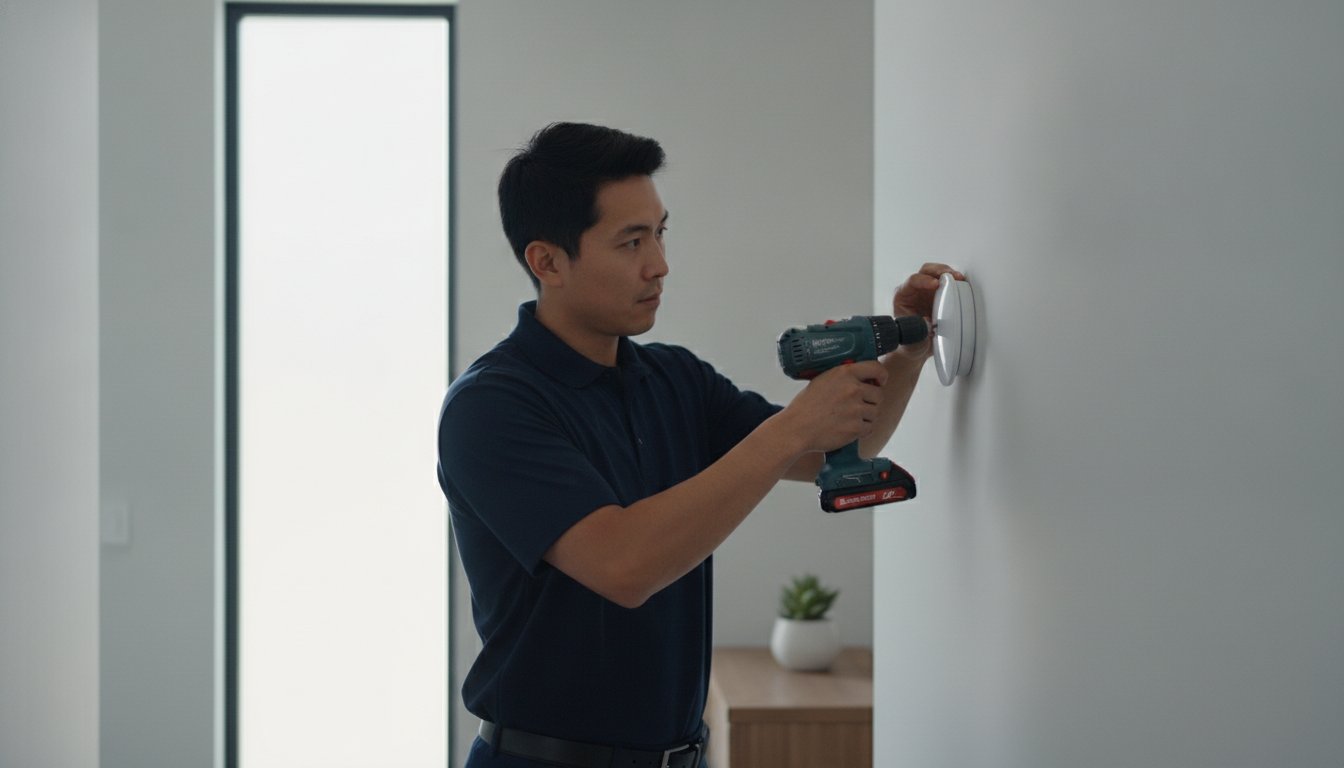
In Los Angeles, 50-70% of rental units fail inspections because of simple issues with their smoke and carbon monoxide detectors. This is a massive risk for a “silent killer” that you can’t see or smell. You want to keep your family safe and your property compliant, but California’s strict safety laws often lead to more confusion than clarity. It’s common to feel uncertain about whether you need hardwired units or if a plug-in model is enough for your San Gabriel Valley home.
We’re here to clear up that confusion and get your home up to code. This guide explains exactly where, how, and why to handle your carbon monoxide detector installation to ensure maximum protection. You’ll learn about the latest 2026 California requirements, including the mandatory 10-year sealed batteries and specific bedroom placement rules. We provide a straightforward checklist that covers everything from Pasadena municipal codes to professional hardwired reliability. By the end of this article, you’ll have a clear path to total home safety and legal compliance.
Key Takeaways
- Learn the critical placement rules to ensure detection sensitivity, including mounting units on every floor and within 15 feet of all sleeping areas.
- Understand the specific requirements of the California Carbon Monoxide Poisoning Prevention Act to keep your property legally compliant.
- Identify common household hazards like gas furnaces and attached garages that make professional detection a non-negotiable safety step.
- Compare battery-powered, plug-in, and hardwired models to determine the best carbon monoxide detector installation strategy for your home.
- Discover how professional installation in the San Gabriel Valley provides peace of mind for families and property managers during rental turnovers.
Understanding Carbon Monoxide: Why Professional Detection is Non-Negotiable
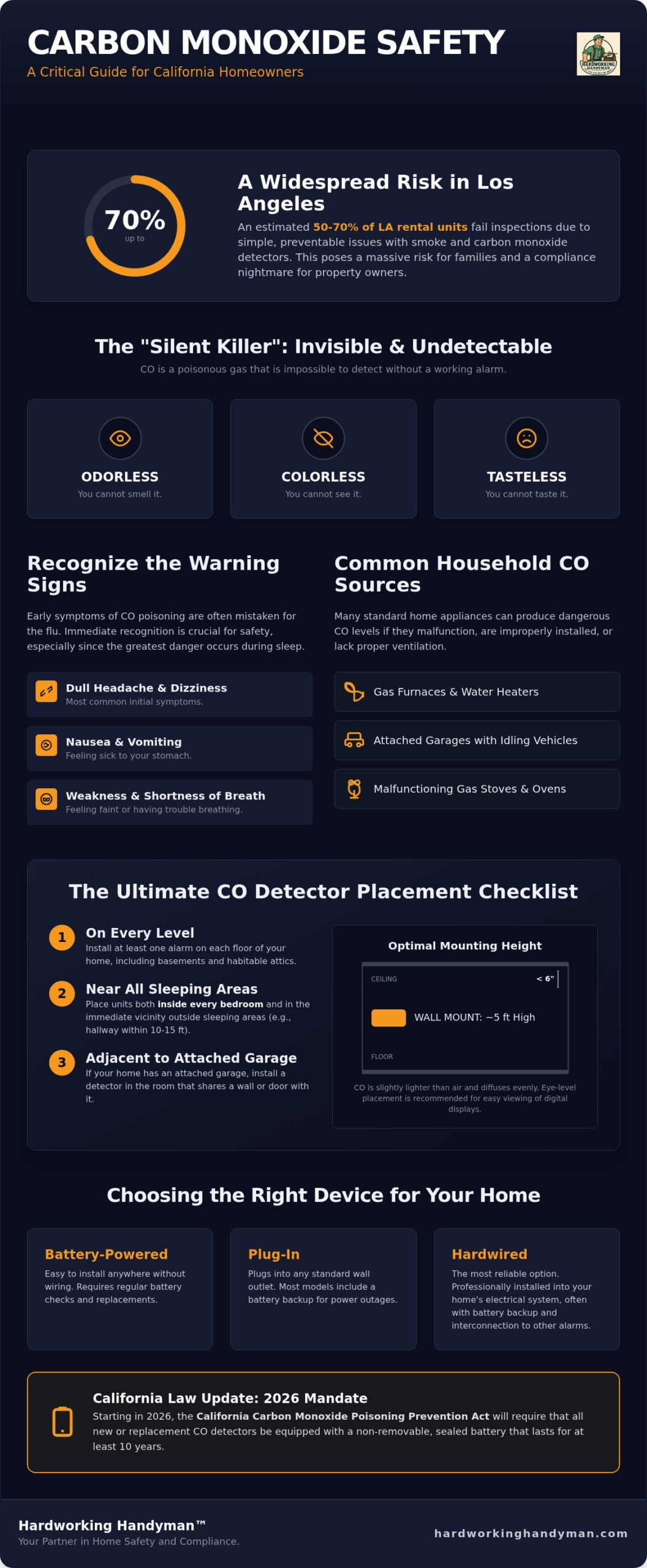
Carbon monoxide (CO) is a gas you can’t see, smell, or taste. It’s often called the “silent killer” because it’s impossible to detect without specialized equipment. In the San Gabriel Valley, many older homes in Pasadena and Arcadia still rely on aging floor furnaces or gas-powered water heaters. These appliances are common sources of CO leaks when they malfunction or lack proper ventilation. An attached garage also poses a significant threat if a vehicle or gas-powered tool is left idling. Because you can’t sense the gas yourself, a professional carbon monoxide detector installation is your only line of defense. It identifies a leak long before the gas reaches lethal levels in your living space.
The Science of CO Detection
Detectors don’t work the same way as standard smoke alarms. While smoke alarms look for physical particles or light disruption, a CO alarm uses a sophisticated electrochemical sensor. This sensor triggers a chemical reaction when it encounters CO molecules, creating an electrical current that sets off the alarm. It’s helpful to understand what is a carbon monoxide detector and how it measures gas concentration in parts per million (ppm). Most alarms are designed to track these levels over time. They won’t sound for a tiny, one-second spike, but they will trigger a loud warning if they detect a sustained presence of the gas. This intelligence prevents false alarms while ensuring you are notified of a real emergency.
Symptoms of CO Poisoning to Watch For
Early exposure often feels like a mild case of the flu. You might experience a dull headache, weakness, or sudden dizziness. Nausea, vomiting, and shortness of breath are also common signs that something is wrong. Because these symptoms are so general, many people ignore them or assume they’re just coming down with a cold. The biggest danger occurs while residents are sleeping. You won’t wake up from the smell of the gas, and the physical symptoms won’t necessarily rouse you from sleep. A high-quality carbon monoxide detector installation ensures the alarm is loud enough and placed correctly to wake every person in the house before the gas becomes fatal.
Risks for San Gabriel Valley Homeowners
Homes in our local area often feature unique layouts that affect how gas moves through the building. Older bungalows in Pasadena might have poor ventilation in small utility closets where water heaters reside. We frequently see properties where outdated appliances haven’t been professionally serviced in years, increasing the risk of a cracked heat exchanger. This makes professional monitoring and correct device placement essential. If you’re managing a rental property or moving into a new home in Arcadia, checking these systems is a top priority. Our handyman services focus on installing these life-saving devices to keep your household safe and compliant with state law.
The Ultimate CO Detector Placement Checklist
Setting up your home for safety requires more than just buying a device. Proper carbon monoxide detector installation depends entirely on strategic placement to ensure the sensors can do their job. California law requires these alarms on every level of your home, including the basement. You must also place them inside every bedroom and in the immediate vicinity outside sleeping areas. Following these CO detector placement guidelines ensures that if a leak occurs at night, the alarm is close enough to wake you immediately. If you have an attached garage, place a detector in the room directly adjacent to the garage door to catch exhaust fumes before they spread.
Use this checklist for your home walkthrough:
- Install at least one alarm on every floor of the residence.
- Place units within 10 to 15 feet of each bedroom door to ensure audibility.
- Mount a detector in the room sharing a wall with an attached garage.
- Keep sensors away from “dead air” spots like deep corners or the space behind heavy drapes.
Optimal Height and Wall Placement
A common myth suggests that CO is heavier than air and detectors must be near the floor. This is incorrect. Carbon monoxide is actually slightly lighter than air and tends to diffuse evenly throughout a room. We recommend eye-level placement because it makes digital displays easy to read during routine checks. If you prefer ceiling mounting, stay at least 6 inches away from any wall. For wall mounting, follow the 5-foot rule: place the unit at least 5 feet above the floor but at least 6 inches below the ceiling. This positioning keeps the sensor in the path of natural air circulation where it can detect gas most effectively.
Where NOT to Install Your Detectors
Bad placement leads to frequent false alarms and sensor failure. Keep your units at least 15 feet away from fuel-burning appliances like furnaces, water heaters, or stoves. Small amounts of CO are often released during the initial startup of these appliances, which can trigger a nuisance alarm if the unit is too close. Avoid bathrooms or laundry rooms where high humidity and steam can corrode the internal sensors over time. You should also stay away from direct sunlight, ceiling fans, or HVAC vents. Fast-moving air can blow CO away from the sensor, delaying a life-saving alert. If you’re unsure about your specific layout, consulting a local expert can ensure your system is positioned for maximum sensitivity.
Our team provides specialized handyman services to help San Gabriel Valley residents hit these compliance marks quickly. We handle the mounting and testing so you don’t have to guess if your family is protected.
Choosing the Right Device: Battery, Plug-in, or Hardwired?
Selecting the right hardware is the first step toward a safer home. You have three main options for your property: battery-powered standalone units, plug-in models, or hardwired systems. Battery-powered units are easy to install and continue working during a power outage. However, they require you to stay diligent about battery replacements. Plug-in models offer simple setup and usually include a battery backup, but they occupy valuable outlet space and can be accidentally unplugged by children or pets. For the most reliable protection, hardwired systems are the industry standard for permanent residences.
Many homeowners now opt for dual-sensor combination units. These devices handle both smoke and carbon monoxide detection in a single housing. This reduces the number of fixtures on your ceiling and simplifies your testing routine. When you schedule a professional carbon monoxide detector installation, choosing these hybrid units is often the most efficient way to meet California’s strict safety codes for rental properties and single-family homes.
The Case for Hardwired Interconnection
Hardwired detectors offer a life-saving feature called interconnection. When one alarm detects a threat, every unit in the house sounds at once. This “one-goes-off, all-go-off” system is essential for larger or multi-story Pasadena residences. It ensures that a leak starting in a garage or basement is heard immediately in upstairs bedrooms. Hardwired units are also more dependable because they don’t rely solely on a replaceable battery. While our team does not perform full electrical rewiring, Hardworking Handyman™ can help with light fixture installation and mounting these safety devices to your existing electrical boxes. We ensure every unit is placed according to EPA guidelines on CO detector placement for maximum coverage.
Smart Features: Are They Worth It?
Modern technology has changed how we monitor home safety. Wi-Fi enabled detectors send instant alerts to your smartphone if an alarm triggers while you are away. This is a game-changer for property managers or homeowners who travel frequently. Some high-end models also include voice alerts. Instead of a loud siren, a clear voice identifies the specific location of the hazard. This helps your family evacuate through the safest route. Look for units with built-in end-of-life timers too. Most sensors last between 7 and 10 years. These timers provide a clear signal when the sensor is exhausted and the entire unit needs replacement. Investing in these features adds a layer of convenience and reassurance to your carbon monoxide detector installation plan. For homeowners already upgrading their home security technology, pairing these smart detectors with a smart lock installation in the San Gabriel Valley creates a comprehensive, connected safety system for your property.
California CO Detector Laws and Compliance
California safety regulations are among the strictest in the country. The Carbon Monoxide Poisoning Prevention Act of 2010, known as Senate Bill 183, set the foundation for home safety. It requires every dwelling unit intended for human occupancy to have a carbon monoxide alarm if the home contains a fossil fuel-burning appliance, a fireplace, or an attached garage. This applies to single-family homes, duplexes, and large apartment complexes alike. Failing to comply isn’t just a safety risk; it’s a legal liability that can lead to fines or failed inspections during property transfers.
SB 183 Requirements for Homeowners
Homeowners must stay current with evolving standards. While the 2010 law was the start, a critical update on January 1, 2016, changed the placement rules. You are now required to have a CO alarm inside every bedroom, not just in the hallway. If you use battery-powered units, California law mandates they have a non-replaceable, non-removable battery that lasts at least 10 years. We often see homeowners forget these details during renovations. Any major home improvement project usually triggers a mandatory safety upgrade to bring the entire house up to current codes. A professional carbon monoxide detector installation ensures you meet these technical requirements without the guesswork.
Rental Property Compliance in San Gabriel Valley
Landlords in Pasadena and Arcadia face high stakes during tenant transitions. California law places the burden of maintenance and testing squarely on the property owner. You must verify that every detector is functional and placed correctly before a new tenant signs a lease. In Los Angeles County, 50-70% of rental units fail initial inspections due to faulty or missing detectors. Keeping a paper trail of these checks and inspection records is vital for your protection.
Our team provides specialized Rental Turnover Services to help property managers hit these deadlines. We provide the following for our local clients:
- Verification of 10-year sealed battery compliance.
- Testing of all hardwired and interconnected systems.
- Installation of new units inside every sleeping room.
- Documentation of functional safety devices for your records.
Using professional carbon monoxide detector installation services simplifies the move-in process. It gives your tenants peace of mind and keeps your investment legally sound. If you need help with a broader range of repairs, our handyman services cover everything from drywall to fixture mounting. Many property managers in Arcadia and Pasadena also take this opportunity to upgrade entry security with professional smart lock installation in the San Gabriel Valley, ensuring rental units meet modern safety expectations from top to bottom. While completing a full rental turnover, many landlords also address storage needs throughout the property with professional shelving installation to maximize organization and appeal for incoming tenants.
Professional Installation: Why Hardworking Handyman™ is Your Safety Partner
DIY guides often claim that safety is a quick weekend project. They suggest that a basic carbon monoxide detector installation takes only a few minutes. This mindset ignores the technical risks of improper mounting or failed interconnection. If a hardwired unit isn’t synced correctly, the “one-goes-off, all-go-off” safety net fails. Hardworking Handyman™ brings professional competence to every job in Arcadia and Pasadena. We don’t just hang devices; we ensure your life-safety systems are fully integrated and functional. Our team is ready to get to work immediately, offering same-day service availability for urgent safety needs.
We bridge the gap between simple repairs and total property compliance. Many local property managers rely on us during rental turnovers to hit strict legal deadlines. We understand that a missed detector can lead to a failed inspection or a significant safety liability. By making carbon monoxide detector installation part of a broader maintenance plan, you protect your investment and your residents simultaneously. We focus on the details that DIYers often miss, such as checking for “dead air” spaces and verifying the 10-year battery seal required by California law.
The Handyman Advantage
Our approach is methodical and efficient. We handle the mounting, testing, and syncing of all units to ensure they work as a single, unified system. We stay current on local building codes that vary between San Gabriel Valley cities. This expertise allows us to place units with maximum detection sensitivity. While we are on-site, we can also manage smoke detector installation and other electrical fixture mounting. This saves you the hassle of hiring multiple contractors for simple safety upgrades. We provide dependable craftsmanship that prioritizes your family’s protection. Homeowners looking to make the most of a service visit often bundle detector installation with professional shelving installation for home organization, completing multiple upgrades in a single appointment.
Schedule Your Safety Inspection Today
Don’t wait for the winter heating season to test your sensors. As you begin using your gas furnace and fireplace more frequently, the risk of a leak increases. Take a proactive approach to your home safety now. We offer clear, honest assessments and functional segments of work that are easy to understand. Contact us for a free estimate on your next project. Our handyman services provide peace of mind through steady, grounded results. We are your neighborly guide for practical solutions in the San Gabriel Valley.
Protect Your Family and Property Today
Ensuring your home is safe from carbon monoxide requires strategic placement and strict adherence to California state laws. You’ve learned that mounting alarms on every level and inside every bedroom is the only way to provide full protection. A professional carbon monoxide detector installation removes the uncertainty of DIY setups and ensures your hardwired systems are properly interconnected.
We bring dependable craftsmanship and local expertise to every home in Arcadia and Pasadena. Our team specializes in rental property compliance and offers same-day service for urgent safety needs. We provide a straightforward approach to home maintenance that prioritizes your family’s well-being without unnecessary complexity.
Take a proactive step toward a safer living environment today. We are ready to help you secure your home and give you lasting peace of mind.
Frequently Asked Questions
Where is the best place to install a carbon monoxide detector?
The best place to install a carbon monoxide detector is inside every bedroom and in the hallway immediately outside sleeping areas. You should also place at least one unit on every level of your home, including the basement. Keep these alarms at least 15 feet away from fuel burning appliances like stoves or furnaces to avoid false alerts. Avoid placing them near windows or vents where fresh air might dilute the gas before it reaches the sensor.
Do I need a CO detector if I only have electric appliances?
You still need a detector if your home has an attached garage or a wood burning fireplace. Even without gas appliances, vehicle exhaust from a car idling in the garage can seep into your living spaces. California law specifically mandates these devices for any dwelling with an attached garage, regardless of the appliance type. This ensures your family is protected from external sources of carbon monoxide that you cannot see or smell.
How often should I test my carbon monoxide alarms?
You should test your carbon monoxide alarms at least once a month by pressing the test button on the unit. Listen for the loud siren to confirm the battery and internal circuitry are functioning correctly. In addition to monthly tests, vacuum the outside of the unit regularly to remove dust that can block the sensor. If your device uses replaceable batteries, swap them out every six months to ensure constant protection during power outages.
What is the difference between a smoke detector and a CO detector?
A smoke detector identifies physical particles of combustion in the air, while a CO detector uses an electrochemical sensor to identify invisible gas molecules. They are not interchangeable because they look for different hazards. Smoke rises quickly, so those alarms must go on the ceiling. Carbon monoxide mixes with the air, allowing for more flexible placement. Using a combination unit is a popular choice for carbon monoxide detector installation because it provides dual protection.
Does California law require carbon monoxide detectors in all homes?
California law requires carbon monoxide detectors in all single family homes, apartments, and multi unit dwellings that have a fossil fuel burning heater, appliance, fireplace, or an attached garage. This regulation, known as Senate Bill 183, was enacted to prevent accidental poisonings. For rental properties, the landlord is responsible for ensuring the units are installed and functional. We specialize in helping local property managers stay compliant with these specific state requirements during tenant turnovers.
How many carbon monoxide detectors do I need for a two-story house?
A two story house typically requires a minimum of one detector on each level, but the total number depends on your bedroom layout. You must have an alarm inside every sleeping room and one in the hallway outside those rooms. If you have bedrooms on both floors, you will likely need at least four units to meet safety standards. A professional carbon monoxide detector installation can help you determine the exact count needed for your specific home layout.
Should I install CO detectors near the floor or the ceiling?
You can install CO detectors on the wall at eye level or on the ceiling. Because carbon monoxide is slightly lighter than air and mixes evenly with it, height is less critical than it is for smoke alarms. We recommend eye level mounting because it makes it easier to read digital displays and test the device. Just ensure the unit is at least 6 inches away from any corners or dead air spaces where gas might not circulate.
How long do carbon monoxide detectors last before they need replacement?
Most carbon monoxide detectors last between 5 and 10 years before the internal sensor loses its sensitivity. Check the manufacture date on the back of your unit to see when it expires. Many modern alarms feature an end of life signal that chirps differently than a low battery alert. When this happens, you must replace the entire unit immediately. Do not rely on an expired sensor, as it may fail to detect dangerous gas levels.